An interview with Doug Rixmann, Founder of OwlOps.
What are some of the challenges multi-unit operators face when it comes to maintenance and task management?
I started OwlOps back in 2009. My brother, who is also a cofounder, operated four Tim Hortons at the time (today he operates six stores). Back then, all of his managers and maintenance staff were performing the way that he wanted them to. But every week, something was still just dropping off.
Every solution we looked at was too complex or expensive. We needed something that kept communication simple but built in accountability—the same challenge many multi-unit operators still face today.
What we see, over and over—not just in maintenance, but across operations—is that communication happens everywhere: texts, emails, Slack, even notes on a whiteboard or napkin. The problem isn’t communication itself—it’s that there’s no shared visibility or accountability once a message is sent. As your c-store grows from one to a few locations, small communication gaps start to show. By the time you reach 10, 20 or 50 stores, those gaps affect brand consistency, guest experience and even spending decisions, like when to repair versus replace equipment.
After we created the OwlOps program, other Tim Hortons operators asked to use the platform and it grew.
Over the next couple of years, how do you see operations in c-stores evolving?
AI will clearly influence every area of operations, from automating routine tasks to spotting inefficiencies across multiple locations. The technology is evolving fast, but the goal remains the same: to help teams focus less on chasing problems and more on serving customers.
What is clear is that retailers need to automate mundane tasks as much as possible, especially as minimum wage continues to rise. Incorporating AI and automating various tasks will free employees to work on more important tasks—like engaging with customers.
How are operators using OwlOps to help coordinate their teams and communicate operational tasks across stores?
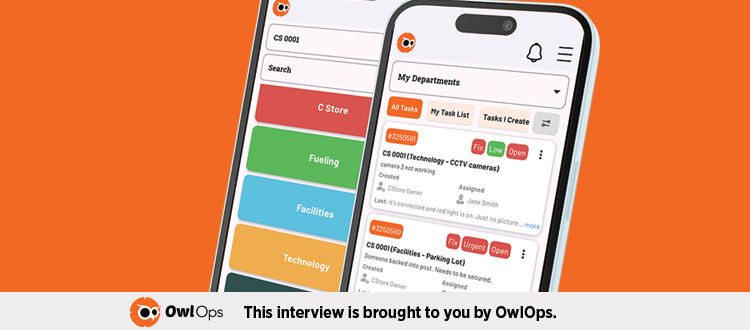
There are a couple of ways to use OwlOps. At its simplest, the system helps teams communicate clearly about what needs attention, whether that’s a maintenance issue, IT support or an operational task. The right people see the right information, which keeps communication clear and consistent. But OwlOps is also a computerized maintenance management system. We have asset tracking where we can scan a QR code on a coffee brewer to bring up its maintenance history and purchase history. You can see that you’ve assigned a maintenance task to a vendor for them to come in and take an extra look at the equipment. It has invoices in there too.
Many operators now use the platform for everything from IT requests to daily store checklists and vendor coordination. It’s less about maintenance and more about creating an organized, consistent way to manage communication and accountability across the business.
What are some new features on the horizon for OwlOps?
We’re leaning into AI in a couple of ways, one being AI insights for predictive maintenance. We’re moving towards a place where OwlOps can tell you “in the last three months, we’ve seen that the gas pumps at these two locations are prone to breaking once every two weeks” or “the soda dispenser at this location might need to be replaced.” From there, the AI can recommend a preventive maintenance schedule.
Another way we’re using AI is through guided troubleshooting—helping employees solve simple issues before escalating them. It’s not just about saving service calls; it’s about empowering managers and staff with knowledge and reducing downtime. The app would have the employee check common fixes, like restarting a device, double-checking that it’s plugged in correctly or offering common fixes for the specific system (“try cleaning the filter, which is located here”) before sending a maintenance employee out to fix the problem. The broader opportunity is for every operator to look at how communication, accountability and organization work inside their business—and where a simple structure can save time and improve consistency. 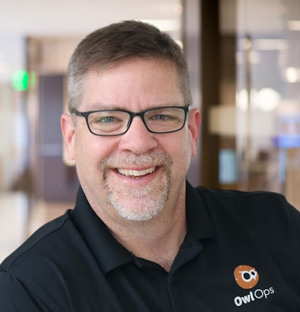
Doug Rixmann
Founder, OwlOps