As convenience stores become more of a destination for prepared foods, operators are paying more attention to flavor. What’s resonating with consumers, and how are different flavors and ingredients being used and combined? What’s popular now, and what’s likely to be popular six months from now?
Which flavors are resonating is very important to Dora Ocampo, category manager, food service, for Westborough, Massachusetts-based EG America. “Flavor trends play a significant role in my work because innovation really depends on understanding where tastes are headed,” she said. “It’s my job to have a grasp on what my guests are looking for and how those preferences are evolving.”
For Kwik Trip, based in La Crosse, Wisconsin, it’s less about the hot flavors and more about the innovative flavors that have become mainstream.
“If the flavors are cutting-edge right now, we’re probably not looking for them yet,” said Micah Rupprecht, director of category management, foodservice. That’s because the retailer’s customers aren’t ready for them. “We serve more than 12 million customers a week, and [a new flavor] has to be known by at least half that group.”
The company, he said, “is not a copycat. We’re aware of the trends and the timeline, and we intentionally try to be behind that. We’re a slow follower.” But Kwik Trip will launch more than 130 LTOs in 2026, so it’s always looking at new flavors and products.
Southwest Georgia Oil Co., based in Bainbridge, Georgia, also doesn’t try to be on the cutting edge of the newest flavors. “It’s great to see what’s trending, but you have to take a step back and see what your customers are prepared to spend their hard-earned dollars on,” said Michelle Weckstein, SPHR, SHRM-SCP, CCACM, director of food and beverage brands.
“It has to be something they will recognize,” Weckstein said. For example, she said, hot honey has run its course in much of the country, but for her stores, “it’s still considered hot and new. The markets we’re in are not considered very progressive.”
Weckstein is also careful not to reach too far outside of her customers’ comfort zone. She couldn’t sell General Tso’s chicken because no one knew what it was. So she changed the name to Sweet and Spicy Chicken, “and now it’s familiar,” she said. Items such as pickles have an enduring popularity in the South, so she drives buzz and innovation by extended them to offerings such as pickle flatbread and pickle-flavored slushies.
“Menu development is something we’re always thinking about,” said Weckstein. “We need to drive sales; we are constantly looking at new flavor profiles. We want to take our base, our comfort food, things we’re known for, and change them up just a little bit to make them fresh and on trend but not so different from what we’re doing. Customers like to try new flavors.”
Big-Picture Analysis
Jasmin Masri, technical sales and marketing coordinator for food and beverage manufacturer Custom Flavors, takes a layered approach when considering flavor trends. She starts by analyzing internal data, looking at what customers are requesting across many categories “to see what’s accelerating and plateauing and what’s quietly emerging.” She also keeps her eye on broader consumer behavior signals such as new-product and seasonal product launches as well as what’s trending in adjacent spaces such as cocktails or wellness beverages.
“My philosophy is, flavor trends don’t appear out of thin air but ripple out of foodservice and even pop culture,” she said. “My job is to pick up on those ripples.”
Along with analyzing Custom Flavor’s data, Masri is a big fan of trade shows, which, she said, “really spark inspiration and validate what we’ve been seeing in the data.”
Food trend expert Kara Nielsen also likes trade shows. “It’s very helpful to get a sense of the new products that are coming out and what flavors we are seeing,” she said. “Usually it’s variations, like a new flavor of pineapple or pink guava. You have to track it over some years.” She also tracks what’s happening in grocery stores, health and wellness, indulgent foods and restaurants.
Renee Lee Wege, trendologist and senior publications manager for Datassential, a global food and beverage intelligence company, starts with her firm’s platforms and tools, primarily looking at menu data to see what’s changing on menus.
The team at food industry consultancy Menu Matters consumes a massive amount of information every day. “We read endless newsletters, scroll through social media, dive into consumer media, conduct our own research, check out wider industry research, attend events and conferences, travel and eat out regularly, and keep tabs on a range of industries beyond food and beverage,” said Mike Kostyo, vice president.
“When you put all of that together, you can find patterns and the general direction trends may be going,” Kostyo said. “It also helps you think critically about the trends organizations are predicting. Does this ring true based on all of this information?”
Kostyo likes to mix old-school ways of keeping up with the industry with newer methods. He has a Google alert for “future of food,” which brings him “a lot of next-generation ideas” every morning, he said.
Maeve Webster, president of Menu Matters, likes to look outside the food industry as well as within it and constantly monitors trends in areas ranging from fashion to architecture, makeup and health care. “All of this speaks to consumer needs—what resonates, what they are most excited about—and this will, in turn, inform and shape their relationship with food,” she said.
Farley Kaiser, senior director of culinary innovation for wholesaler McLane Co., looks for flavor trends everywhere. “We collaborate with flavor houses, industry connections, foodservice data experts and ingredient suppliers,” she said. “These partnerships help us balance craveability with operational feasibility and ensure our innovations are data-driven.”
Finding Trends on Social Media
It’s worth using social media to keep abreast of the conversations that are happening related to flavors, ingredients, food and beverage.
But just because something’s popular on social media doesn’t mean it’s applicable to a convenience store, where prepared foods ideally are low-cost and portable.
Still, social media’s influence should not be underrated. According to Datassential research, 46% of Gen Z says they’re more likely to try a food or beverage just because they saw it on social media. The hard part for operators, Wege said, is knowing what to try.
Social media is especially useful for spotting viral combinations, said Kaiser, such as “swicy” (sweet plus spicy), “swalty” (sweet plus salty), miso caramel and yuzu wasabi.
Weckstein pays attention to social media because it “creates a curiosity for our customer base, so by paying attention to what’s being talked about, some of those things will work,” she said. “It doesn’t have to be the most recent Asian spice, but if it’s relatable and creates curiosity, it might work.”
Much of what’s on social media can be testing the waters, “meant to stir up drama and excitement around the brands,” said Lizzy Freier, senior director of menu research and insights for foodservice consultancy Technomic.
Masri of Custom Flavors said social media trends move and become popular so quickly that you see them trickle down to restaurants and CPG. “People want to taste what’s trending and what’s viral, even if it’s short-lived,” she said. “For convenience stores, these quick trends can work as well as an LTO.”
Ocampo of EG America loves using social media to identify what’s hot and trending in the food world. “New and emerging flavors often surface first through viral recipes and influencer content, so I keep an eye on that space pretty closely,” she said. “I monitor hashtags and follow food bloggers to see what’s trending and understand which flavors are sticking around.”
Bringing in the Team
It’s very important to Kwik Trip to know what its customers think of recently launched prepared foods and beverages. If someone has written in or called, the Kwik Trip team believes it’s worth checking into. Rupprecht especially tracks feedback on the day a new menu item is launched. And staff members are included in foodservice decision-making. They’ll brainstorm and try foods, then share their thoughts.
Weckstein involves Southwest Georgia Oil’s team members, too. “We test products and get [line cooks’] feedback,” she said. “They represent our demographic in most of our stores. We take the feedback from them and consider that in every item before it goes on the menu.”
Long before a flavor is ready to be introduced to Southwest Georgia Oil’s customers, Weckstein will have spent months or years thinking about it and brainstormed with her staff so that when the time is right, the company can roll it out. “We have to be able to pivot very quickly for survival, and we want our brand to be relevant,” she said. “We’re in a very competitive landscape. We’re competing against every other food operation.”
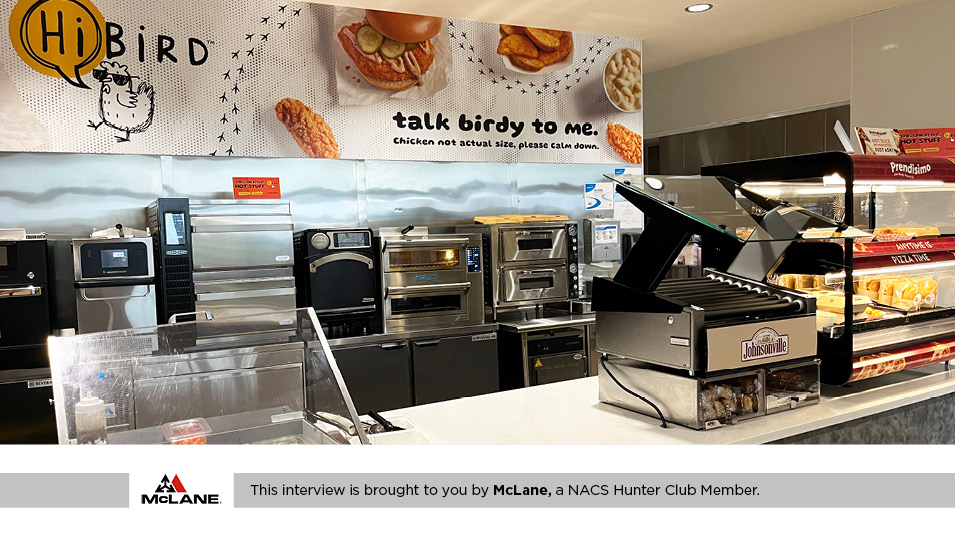
McLane regularly gathers feedback from customers through store-level employees, guest surveys, pilot programs and loyalty data. “For example, our HiBird launch incorporated consumer input, revealing that Korean BBQ was especially popular with Gen Z,” said Kaiser. “We also use POS data and repeat-purchase behavior to validate which flavors succeed.”
The company likes to involve other teams, too. “We host sessions at our Innovation Kitchen, where cross-functional teams across culinary, marketing and category management collaborate,” she said. “We start with consumer insights, then layer in seasonality, operational constraints and trend-forward ingredients. Flavor-mapping exercises help us identify gaps and opportunities, and we prototype with partners to test feasibility.”
Meetings of the Minds
Key to knowing what’s going on in the world of flavor is networking with everyone you can in the industry.
“I’m always talking about flavors or what’s coming out with my circle,” said Masri. “You can get great inspiration from those conversations.”
Kostyo of Menu Matters loves getting together with chefs and R&D professionals “because they are so immersed in the actual creation process, and it’s fun to pick their brains,” he said. “We have a network of chefs, other industry consultants, marketers and nutritionists.” This, he said, “helps you focus on the fact that nothing is one-size-fits-all. What one person considers a trend may not be valid for another chef, or what might seem like a played-out trend on social media may be just right for an established brand.”
Ocampo leans largely on her vendor partners to know which flavors are hot. “They have access to resources and insights that go well beyond what I could gather on my own, like national and regional performance data and deep consumer research,” she said. “They put the research hours in behind the items they want to move forward with.”
Southwest Georgia Oil works closely with its food broadline distributor. The team meets with reps to talk about trends and spends time in the kitchen on ideation and product testing. “I’m not a chef by trade, so I rely on those subject matter experts,” Weckstein said.
Tracking Restaurants
Restaurants are a great barometer for what’s popular in flavor, especially independent restaurants, which have more flexibility to try things and eliminate them if they don’t work.
Wege of Datassential said trends start in independent restaurants. As the trends are adopted, they appear in restaurants with just a few units, then move into national brands when they’ve hit the mainstream.
Freier likes to start by looking at independent restaurants to connect any commonalities to a macro trend. It might be an herb that’s being used more frequently. She’ll look at the flavor profile of that herb, where it’s showing up on menus and what it’s being paired with. If something starts with an independent, she watches to see if it goes to an emerging restaurant and then to mainstream operators, including c-stores.
For an independent to develop something and see if it works can be fast and relatively inexpensive, Freier said. For fast food restaurants, it’s much more expensive, which is why they use LTOs to test out ideas. “Every single year of the past five years, we’ve seen a significant uptick in limited-time offers,” she said.
Webster and Kostyo say they visit as many restaurants as possible. “You never know what really insightful nugget or really inspiring item you’ll find,” Webster said.
But just because you see something on several menus doesn’t mean it’s a trend, Kostyo said. “Visiting restaurants is more about sparking ideas, finding real-world examples of what you are seeing in data,” he said.
Rupprecht of Kwik Trip is immersed in the culinary world. “A lot of my life is about food,” he said. “I take a lot of trips, and it’s all about regional foods and what’s popular.” And while he might find new things, he often files them away for the future. “Just because we’re not putting it on our menu, we should know what it is. We sample some foods, and we know it’s not making it on the menu for at least 10 years.”
Weckstein prefers to monitor what’s popular at fast food restaurants because if a flavor’s being featured there, it’s fairly mainstream. But she also likes to look at local grocery stores. “If I’m seeing a food or flavor there, my customers are, too,” she said.
She also monitors what’s being served at a couple of national brands—one offering smoothies, one featuring Southwestern food—for which Southwest Georgia Oil is a franchise operator.
“They are always bringing in new flavor and trends,” she said, “so we look where they’re spending their national marketing dollars. If they feel they should spend it on something, it must be popular. They introduce new flavors and spices all the time.”
Fads Versus Trends
What’s a fad and what’s a trend? By and large, a fad comes and goes quickly, but a trend lasts. But fads can be important if they create some excitement and some novelty, even for a short time.
“We’re increasingly seeing trends move faster through the life cycle than they have in the past,” said Freier. And even if it’s a fad, she said, “it’s usually relevant to something larger and hasn’t come out of a vacuum.”
Operators considering implementing a flavor or flavor combination—whether it’s a fad or a trend—need to look at whether it’s going to be applicable across multiple menu categories, said Wege, and whether a flavor requires additional flavors or ingredients that are scalable.
A long-term trend with staying power, Wege pointed out, “has to be unique but not unapproachable. If it’s too unique, you have to spend a lot of time on education and marketing, and if it’s not [at all] unique, then consumers can be like, ‘Who cares?’”
Drinking Up LTOs
Kwik Trip tends to roll out new items company-wide. For its most recent launch, it started with a test in 30 stores, then gradually added more until it was complete.
However, a new item may run only as an LTO. “We may only commit to two months of inventory, and if it’s slower than I thought or if it flops, I’ve only committed to so much inventory,” said Rupprecht. “But typically we get so much excitement around something that the manufacturers can’t keep up.”
Ocampo is a huge fan of using LTOs to introduce new flavors. “They allow us to test the waters without a long-term commitment while still giving us the flexibility to transition into a permanent offering if it really connects with our guests,” she said. “It’s a lower-risk approach to innovation that comes with a built-in exit strategy. I find it much easier to extend a successful LTO than to discontinue a permanent menu item.”
Beverages are a great option for introducing new flavors through LTOs. Consumer sentiment toward beverages is changing, especially with younger generations viewing them as a dessert replacement, a low-cost investment and something exciting to consume.
Because of this, said Freier, the beverage space is innovative when it comes to flavors, which can also influence flavors in foods.
“Beverages are more innovative and do a lot of blended flavors,” said trend expert Nielsen, adding that often an unusual flavor is paired with something more familiar to make it more accessible. Flavors in beverages can experiment with tropical, nostalgia, unusual fruits or even herbs, she said.
And the nonalcoholic space has exploded, “thanks largely to Gen Z not drinking alcohol and supplementing with these drinks,” said Wege. They’re also more affordable, so there’s less of a barrier to trying them, she said.
And for the companies producing the beverages, it’s a fairly low investment because usually only a tweak to packaging and marketing is needed. If a brand already has a loyal following, Wege said, those followers will likely sample a new flavor “so they don’t have to spend a lot of time convincing someone to try it.”