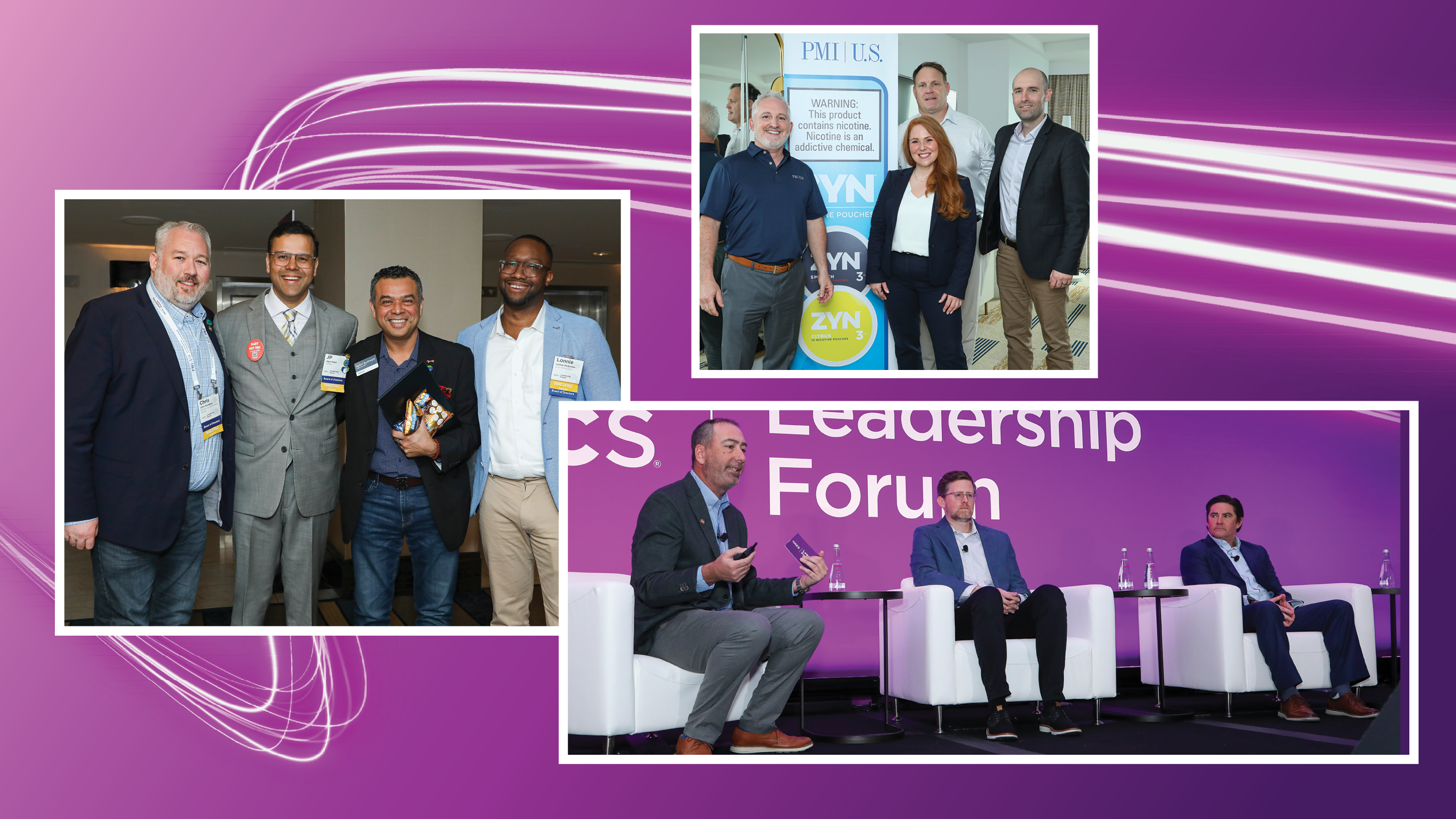
“I’m a firm believer that a rising tide lifts all boats,” said Frank Gleeson, president and
CEO of NACS, at the 2026 NACS Leadership Forum in Miami. “As we only get better in quality—in our reputation, in our stores, in our offer—we will win more market share as an industry. I am excited because we can grow so much more.”
The event was characterized by fun, networking and insights from industry leaders. Here are some of the highlights.
Looking Forward to the Future
In January, Amazon announced it would close all of its Amazon Fresh and Amazon Go just-walk-out locations. To Gleeson, that’s a sign that people are still the most important part of the store.
“The first time I visited an Amazon Go, I thought, ‘There’s no service in this. There’s no warmth. It’s just a transaction. I could do this online,’” he said. “I also think Amazon didn’t understand retailing at a local level. You can’t get away from our ability to understand our local customers and then cater to their needs.”
Gleeson, who is in his first year leading NACS, outlined his key areas of focus:
- Foodservice: “We are a threat to QSRs, because as an industry we’ve got the locations and the service. They have been losing ground, especially on price.”
- Advocacy: “I think this year could be a breakthrough year for the Credit Card Competition Act (CCCA). The NACS government relations team has done a phenomenal job the past 20 years to position us for this moment. But it won’t happen without everybody in our industry participating and advocating.” The CCCA, which has bipartisan support, was recently endorsed by President Trump and was then reintroduced in Congress.
- Technology: “With technology, we want to make sure we are future-proofing the industry and moving at pace,” said Gleeson. Three programs from NACS could be key to this: Thrivr (convenience.org/thrivr), TruAge (mytruage.org), and Prospr, a digital coupon program.
“We’re thinking about how we can improve 1%, and when you aggregate those, then you become 10% or 20% better. Those small things will matter,” said Gleeson.
The OXXO Way
FEMSA opened its first OXXO store in Mexico in 1978 and now has over 35,000 locations in 19 countries. In 2024, FEMSA announced it would bring OXXO to the United States with the acquisition of Delek’s DK stores.
OXXO didn’t start as a convenience retail success story. It started as an experiment that took more than 20 years to figure out, said Constantino Spas Montesinos, Americas and mobility director at FEMSA.
FEMSA started as a brewery in the 1890s. “Mexico is a market of a lot of exclusivity, and a lot of regional brand loyalty and protection,” said Montesinos. The brewery needed a way to distribute more widely and was looking for a non-traditional route that would allow it to break through the high number of distributors in the country. Enter the concept of running a c-store.
“They said, ‘Why don’t we showcase how to execute our brands at the point of sale? Now, that’s definitely not a customer-centric approach, and it didn’t work,” said Montesinos. After 20 years, OXXO’s growth was stalled at 1,000 stores.
“But FEMSA’s leaders have a long-term, generational view. They knew there was an opportunity, so they continued to iterate, and finally recognized that in order to grow and to serve the customers better, they had to shift to truly understanding the consumer and start to adjust their value proposition along those lines.”
OXXO’s growth took off when it shifted from selling products to solving everyday pain points, Montesinos said.
The company focuses on four success pillars:
- A customer-centric, layered value proposition as a differentiator: “One thing that characterizes us is that we’re constantly working to identify what is the next layer of value that we can add to the customer,” said Montesinos. One example of this is that OXXO offers extensive bill pay and financial services, effect-ively functioning as a banking access point in underbanked communities. “If you add ... all of the bank branches in Mexico, it’s not even half of the stores that we have in Mexico. So [OXXO stores] have become a place of convergence, not only for our traditional merchandise, but also for many other things,” Montesinos said. “And we continue to identify what services we can offer and what type of pain points can be solved for the community in our stores. Most of them are non-fuel stores, so they’re neighborhood stores.”
- Operational excellence in systems and processes at scale: “Everything is standardized, everything is measured, there are no deviations. This drives a lot of consistent execution across such a wide network,” said Montesinos.
- The “store factory” mindset: OXXO’s underlying growth strategy focuses on the idea that a repeatable system allows it to open high-quality, standardized stores quickly and at scale.
- Culture as infrastructure: Culture is embedded into OXXO’s processes, and its leadership believes the systems don’t work without the culture, and vice versa. Montesinos said FEMSA’s leaders create an environment of trust, collaboration and local empowerment that mobilizes the organization toward growth.
While it is the dominating brand in Mexico, FEMSA learned that scaling a concept globally doesn’t always translate across geographies. When it initially expanded into Colombia in 2009, its first country outside of Mexico, it tried to replicate the model exactly—the same systems, pricing, structure, processes and products. The result was years of stalled growth.
“Nothing happened for many years until we learned and understood that each market has particular idiosyncrasies, processes, etc. The value proposition for the consumers needs to be different,” said Montesinos. “We needed to start understanding and finding the right balance between what makes us successful at the core and what can make a store successful in one particular market.” The brand is consistent—but the mission, food, products and components of the business model change by market, he said.
Using AI vs. Doing AI
Sol Rashidi, an AI expert and consultant, emphasized that “using AI” and “doing AI” are not the same thing. Your company could have 500 Microsoft Copilot licenses, and that could certainly help your employees in their day-to-day work.
“But could you imagine measuring productivity on how many emails you wrote faster? That’s using AI,” she said. Doing AI is harder. It’s a shift that requires organizational redesign and change management, not just introducing new tools. Doing AI “requires you to take your function, your role, tasks and subtasks, and identify what should be outsourced to any number of AI mechanisms versus what fundamentally requires human judgment and discernment.”
One of the areas where she said companies trip up most often: deciding what use cases should be AI-led and which should be human-led and AI supported. “It’s a distinction that makes a massive difference in your approach,” Rashidi said.
Additionally, AI solutions should match the complexity of the business problem you’re trying to solve, and one of the biggest mistakes companies make is using AI just for AI’s sake.
“If my problem is to cut a piece of paper in half, why on earth would I introduce a chainsaw into the mix if scissors do the job? Guess what? A lot of things don’t necessarily need artificial intelligence. There’s amazing tech from the past 30 years that solves the problem, but sometimes we get stuck in the shiny toy syndrome. Don’t overcomplicate a situation if you don’t have to,” she said.
Successful AI implementation requires two non-negotiables, she said. First, good data governance and smart AI security both protect data and can prevent runaway costs, errors and unintended agent behavior. Second, workforce preparation is essential. This means making sure employees are truly AI literate, not just giving your people a quick training session.
“Pushing AI into production is not what will determine your success. It’s the adoption that determines your success,” she said.
What’s Fueling the Industry?
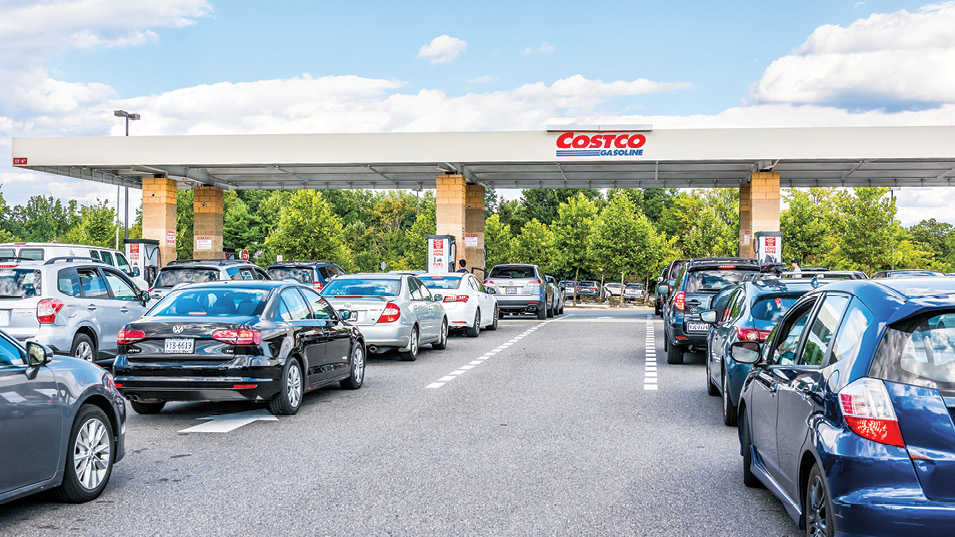
Fuel is still driving (and funding) the c-store business.
“In NACS State of the Industry research, the profitability of the forecourt always stands out every year, and that’s not talked about enough. It’s not as sexy as foodservice or AI, but ... that’s where the money comes from,” said Jeff Burrell, vice president of retail engagement, research and education at NACS.
Here’s how two retailers shape their fuel strategy to remain competitive:
Alimentation Couche-Tard/Circle K
Circle K sells 42 million gallons of fuel per day across its more than 17,000 global sites. “Fuel is critical to our business. Fuel is 49% of Circle K’s gross profit overall—our biggest category. It’s a main driver of traffic into our stores,” said Casey Thomas, head of North America supply at Alimentation Couche-Tard.
Circle K has centralized its fuel operations globally to manage supply, pricing, logistics, fuel marketing and B2B sales, allowing the company to drive efficiency and scale, Thomas described.
“In the U.S., that’s largely through pipeline terminals. We now own five terminals in the U.S. For a long time, we were heavily branded, which meant that we didn’t participate much in the supply chain. In an unbranded world that we’re growing into, there are more options for supply, though there’s more risk in terms of the availability of that supply by region,” said Thomas. “We are starting to add bulk supply and ship our own product. It’s all about how do we find that next incremental value?”
Global Partners
Global Partners is one of the largest independent owners, operators and suppliers to retail and convenience stores. It supplies approximately 1,700 fueling locations, operates more than 200 company-owned sites and operates 55 liquid energy terminals with approximately 22 million barrels of storage capacity, said Jeff Mansfield, vice president, branded wholesale supply at Global Partners. Its strategy centers around vertical integration, which allows it to manage volatility, understand regional demand and optimize margins by aligning wholesale, retail and terminal operations.
“Our strategy has been ‘buy, integrate and optimize.’ Optimization is what I focus the most on. A lot of it goes back to understanding what your competitive landscape looks like, knowing what the logistics are or what the next best alternatives are,” he said. “We have to have the right allocation, the right cost and the right relationships. … I think if you have those three things, you can have success.”