“The problems consumers expect to solve with a beverage are multiplying,” said Howard Telford, head of soft drinks with market research firm Euromonitor International. “As consumer priorities diversify and scientific narratives evolve, functional is becoming an umbrella term—not just a performance drink, but a portable, format-flexible solution to a growing list of lifestyle concerns.”
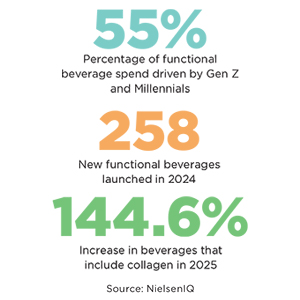
Functional beverage sales increased by 8.8% in 2025, according to NielsenIQ. The market has seen more products promising more benefits. It’s an increasingly important—and increasingly complex—category.
“People are trying to maximize their consumption of things that are good and minimize their consumption of things that are harmful,” said Huy Do, research and insights manager at Datassential. Functional beverages, he explained, “give people a simple and easy-to-understand source of what they want.”
And they have benefits over food products, he said. Consumers find them easy to consume, easy to carry—and generally an easy source of nutrition. Convenience stores are a great spot for functional beverages, Do said, because this channel is already front of mind for consumers when it comes to beverages.
While functional drinks appeal to everyone, they do skew younger, said Chris Costagli, vice president, food and beverage insights, NielsenIQ. Gen Z and Millennials are driving 55% of the functional beverage spend.
Functional Convenience
Functional beverages are growing at Tiger Fuel Company (Charlottesville, Virginia), which has 10 The Market stores. “Everyone is looking for something from their drink … improving focus, improving energy, health reasons,” said Bryce Proffitt, retail merchandising manager. “People are looking for something more than a caffeine pick-me-up. Everyone is trying to be more focused on what they’re putting in their body.”
At QuikTrip, “Functional beverages are experiencing rapid growth and moving firmly into the mainstream, with strong sales momentum and increasing consumer demand,” said Aisha Jefferson, spokesperson.
The biggest demand for these beverages comes from Gen Z and Millennial customers. They’re looking for promised benefits like calm, focus, energy, hydration, gut health and recovery, she said.
Convenience stores are an ideal spot for consumers to trial these beverages, Telford said. “If you want to experiment with a new flavor or a brand you haven’t heard of, you’re probably not going to Walmart to buy a six-pack. This is the experimentation channel.”
These drinks can command a premium price because they’re offering benefits, said Telford, “and consumers are happy to pay that premium. If it tastes good and answers the question of ‘what is it doing for me,’ that’s the place to be.”
Fireside Market (Slinger, Wisconsin) has seen “very steady sales” with functional beverages, a category that continues to grow and perform consistently, especially with female shoppers, said Peter Juzenas, director of operations. “We’re constantly getting questions from guests and we’re adding more SKUs.”
Big Brands and Niche Players
A longtime leader in functional beverages, Gatorade continues to innovate with products like Gatorlyte (launched in 2021), powders and, most recently, Gatorade Lower Sugar (launched this spring). “We’re not only serving athletes, but developing solutions for everyday movers looking for all-day hydration,” said Noel Rodriguez, vice president of commercial for Gatorade, which is owned by PepsiCo. “Our goal is to offer everyday movers exactly what they are looking for and pack in the benefits.”
Convenience stores, he said, “are a critical component of our strategy, as we have a high volume of consumers who purchase our products on the go.”
7-Eleven offers a line of functional beverages under its 7-Select private label, with hydration, nutrition and performance benefits. There are several brands within the line, including Rehydrate and Replenish for sports performance and hydration; Fusion Energy and Fusion Energy Shots to support energy, give a mental boost and elevate mood; and Rebuild, which features high-protein shakes. This spring, the chain is launching a three-SKU line of Vitamin Enhanced Water.
At QuikTrip, both large brands and startup companies are popular for functional beverages. Large brands fuel category expansion, Jefferson pointed out, while niche brands drive “discovery and excitement though they rely heavily on strong placement.” C-store shoppers, she said, “want a balance: trusted staples alongside new functional innovations.”
While larger brands command the most trust, the situation is changing, said NielsenIQ’s Costagli, because “younger shoppers are more likely to say they have higher trust in smaller and emerging brands.” And, he added, a brand’s reputation and legacy matters less to Gen Z when it comes to trust. Functional beverage consumers are very open to trying new brands, said Juzenas, “because most of them are very new to the game. And social media has a heavy influence on beverage categories.”
Tiger Fuel is putting a big focus on small, local brands. The retailer recently launched a special section in its coolers with “Made in Virginia” signage. The retailer carries Crunchy Hydration, which offers a full spectrum of functional beverages, including Blue Ridge Kombucha and Running Lights energy drinks.
There are customers for both the big brands and the smaller ones among Tiger Fuel’s customer base. Some shoppers, explained Maurice Lamarche, vice president of operations, like the idea of buying a product that is new and unknown, “or maybe that local product makes them feel that sense of pride.” Tiger Fuel ensures it educates its employees so they can recommend beverages to customers. To do this, the retailer starts by listening to what shoppers want. Employees at the store level report this back to the buyers. “If we’re listening to our customers and carrying the products they want, they don’t have a reason to go down the road to buy something,” said Lamarche.
Merchandising and Innovation Opportunities
QuikTrip stores group these beverages by function “to create a clear, simple and intuitive shopping experience for customers,” Jefferson said.
And these sections tend to look good. Most functional beverages come in cans, which provide a “nice shiny packaging that looks cleaner,” said Proffitt. And the manufacturers of these drinks, he pointed out, have created a great-looking product.
Lamarche added that the industry learned a lot from the boom of craft beer, where every brewery had to distinguish itself with its can due to the proliferation of competition. “With easily identifiable cans,” he said, “it becomes easy [for consumers] to identify when a store has what they want.”
It’s important that the packaging of functional beverages communicates the right amount of information, said Datassential’s Do. Manufacturers should emphasize one or two top claims—or “buzzy words”—on the front of the packaging. “People are looking for one or two things rather than have the beverage do everything. They’re more interested in seeing the function rather than the ingredients that get you that function,” he explained.
And innovation is key, he said. “Innovation is helpful in meeting the constant demand and the shifting consumer mindset … because category winners aren’t settled in this category yet.”
It’s important, in such a trending category, to keep offering something new, said Proffitt. “We want to make sure we’re offering that exciting new product.”