Convenience foodservice continues to undergo an evolution worldwide. According to experts, the same trends that are so visible in the United States are impacting foodservice globally.
That includes c-stores becoming more of a destination for fresh offerings across all dayparts; a marriage of grab-and-go and prepared on-site meals; an emphasis on technology; and global borrowing, as c-store operators look outside their own national borders for best-in-class ideas.
There’s great opportunity in foodservice for convenience retailers, said Dan Munford, CEO of Insight Research and a NACS relationship partner based in the United Kingdom, as “c-stores hold a price advantage over quick-service restaurants, making them attractive for budget-conscious consumers. They also really value the efficiency of c-stores being a one-stop shop.”
Boundaries are blurring, and some consumer trends cover the market no matter what country.
“Consumers increasingly favor bold, global flavors—think spicy offerings like sriracha, sambal and harissa—as well as fresh, better-for-you options such as customizable, plant-led items. Innovation is key: Items that are social-media-friendly, affordable, and health-conscious are steadily rising in popularity,” said Munford.
But while the global convenience industry gets better at foodservice as a whole and begins to cross intercontinental lines, regional trends, culture and staple foods still define individual foodservice markets around the world.
From historical German foods that everyone knows and loves that now have snack versions in c-stores to the success of South American coffee programs to the prevalence of QSR partnerships in Asia and the Middle East, here’s what’s trending, what’s working, and where opportunities await for retailers across the world to be on the forefront of convenience foodservice.
Scandinavia
In Scandinavia and Denmark, train stations make up about half of the convenience store market, said Magnar Møkkelgård, a NACS relationship partner based in Norway. “There is a lot of competition from small-format and discount grocery stores, so convenience stores in this region are primarily traditional gas stations and quick, grab-and-go stores in transit hubs.” This has positioned convenience stores as a destination for the “one-second customer,” he said. “The train doesn’t wait for the commuter, so grab-and-go, speed of service and easy packaging are all really important. We have what we call the ‘single-handed customer’ so you have to have products for that traveler on the go.”
Convenience stores in this region don’t have large kitchens, which impacts their foodservice models. “Some things such as hot dogs, bakery products and sandwiches are made in store by the staff, especially at gas stations, while take-home products such as salads come from a commissary and get distributed to the stores,” he said.
Another trend in this region—healthy foods and demand for “trending items,” said Møkkelgård. “7-Eleven Denmark has partnered with small, trendy restaurants and startups. They’ve actually gone so far that they have become mentors of sorts, where if they think the startup has commercial potential, they help them along by giving them distribution in 7-Eleven. This has been huge for 7-Eleven’s differentiation in the market.”
In Scandinavia, healthier items are “taking up much more space in convenience stores compared to the U.S. Salad bars have become a huge thing in Sweden in particular,” he added.
Bakeries are extremely popular, and c-stores have capitalized on the trend, often bringing in items half or fully baked that are frozen and then baked fresh on site. “Each country has a favorite—in Denmark it’s the croissant, in Sweden it’s the cinnamon bun, while in Norway it’s the raisin bun,” said Møkkelgård.
He also noted that consumer concerns over sustainability have impacted food packaging in particular. “Everyone is trying to move away from the use of plastics and is offering wood or cardboard wherever they can. There’s a huge tax on plastic shopping bags, so everyone brings their own. The whole convenience business now looks at the use of resources as a whole—there’s been some interesting discussion around red meat. Reitan Convenience in Sweden started using alternative meat in hot dogs and had a lot of success selling chicken hot dogs. Their angle was primarily sustainability and health, and the customer liked it,” he said.
Germany and Europe
There’s significant potential for foodservice growth in Germany, said Christian Warning, owner of The Retail Marketeers and a NACS relationship partner based in Germany. There are 14,000 convenience stores and gas stations in the country, but the industry only captures about 1% of the away-from-home food market, or about $1 billion. “This is because of the high-density city centers and prevalence of supermarkets and bakeries. But gas stations have two big competitive advantages: our locations and our people. We have the consumers coming to sites and we have a ‘one-stop shopping’ model, so we have a lot of room to grow the foodservice market.”
One of the most popular c-store food items in Germany is bockwurst, a steamed sausage that’s a staple in the northern and eastern regions of the country. “The convenience channel owns more than half of the bockwurst market, and they’re very easy to make because you just put them in a steamer.”
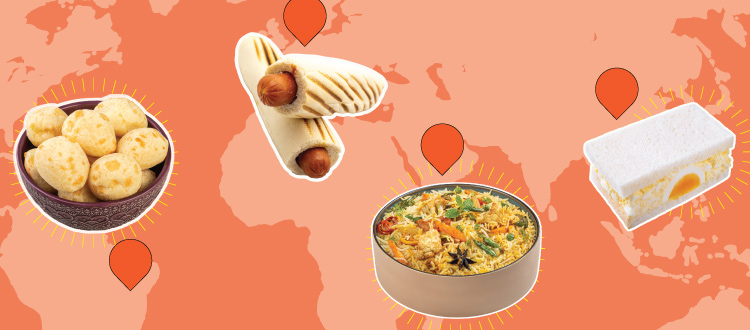
Fransk hotdogs from the Nordics, which are hotdogs that are inside a roll (usually a French baguette or a pretzel roll) and therefore are easy to eat one-handed, are “one of the most successful and best on-the-move convenience store and gas station foodservice products,” he said. “Every third driver in Norway is buying this hotdog. You can put sauces inside the roll and they’re much easier to drive with. They’re extremely common in Norway, Denmark, Sweden, and also in Switzerland.”
Leberkassemmel, a version of traditional German leberkäse, a meatloaf of sorts made from finely ground corned beef, pork and bacon, has emerged as a popular c-store snack. “Imagine a thick, warm slice of this baked meatloaf wedged into a fresh, crusty bread roll. It’s often served with a dollop of mustard. It’s the ultimate German street food and is perfect for a quick, filling meal on the go. It’s a staple of Bavarian fast-food culture and a popular ‘second breakfast’ for many,” Warning said.
Pretzels are another top-selling item in German c-stores. “We invented the pretzel. It’s everywhere.”
Additionally, some c-stores along the autobahn and truck stops in particular have added seating or partnered with popular QSRs for foodservice. “That’s typical for those highway exit stops, while traditional convenience stores are more focused on coffee and grab-and-go type items.”
“I’d encourage convenience retailers to focus on the fundamentals that consumers are looking for at c-stores—have the best coffee in the away-from-home market. Have the best snacks. Have a good grab-and-go food selection. Offer some alternatives. Have a good offering for your dayparts,” Warning said.
Argentina
Argentina, like many countries in Latin America, has a legacy of c-stores that were owned by large oil companies, where the customer was the car and its engine, and not so much the passenger, said Claudio Reboredo, partner at FGC Fuels Marketing and a NACS relationship partner based in Argentina. That said, he also noted that the country is part of the global shift toward offering enhanced foodservice.
“At the moment, there are two different avenues companies are taking when it comes to foodservice,” Reboredo explained. Some create their own concept and develop their own food, like YPF (which was recognized as one of the 2024 NACS Convenience Retailers of the Year Latin America), which has its own proprietary programs, including coffee, sandwiches and more.
Other brands decided to try something different and go with a branded offer in addition to building a proprietary concept. Lion Place introduced Havanna’s coffee, a brand that Argentinians know and love—causing coffee sales to jump more than four times. It also developed our own fast-casual concept, called Tangrill—“which is actually growing significantly because people don’t expect the c-store to have such high quality food,” Reboredo said.
The menu at Tangrill focuses on grilled items, as “grilling is a large part of Argentinian culture,” he said. The fast-casual concept offers ribeye steaks, salmon, pork and chicken. Other options include premium burgers and grilled chicken sandwiches.
Coffee is a significant category of foodservice in Argentina, but “it’s less about the beverage and more about sitting and enjoying a cup of coffee in that place, especially with others. So big tables with comfortable chairs are crucial to the success of the site,” Reboredo explained.
In Latin America overall, foodservice has focused on partnering with QSRs. In Chile, the company Copec has “significantly boosted its foodservice offerings by acquiring 100% ownership of the Chilean burger chain Streat Burger,” Reboredo said. It also became the Chilean master franchise for Sbarro, including both in-station and standalone locations.
Reboredo noted that in Colombia and Panama, Terpel has strategically aligned with the Sbarro pizza franchise, “leveraging a recognized brand to attract customers,” while in Brazil Ipiranga’s ampm launched “an exclusive joint venture with Krispy Kreme in April 2025.”
China and Asia Pacific
In the convenience channel across Asia Pacific, food is not just an add-on—it’s an integral part of brand identity, said George Zheng, NACS director APAC. “Walk into 7-Eleven Japan, and you’ll see crowds grabbing their tamago sando (egg salad sandwiches) or oden stew, which is similar to hot pot with ingredients like fish cakes, tofu and more. At FamilyMart it’s all about famichiki crispy chicken. Over at Lawson, Uchi Café sweets turn pastry lovers into loyal regulars—one popular product is its mochi,” Zheng said.
He noted that it’s the same in Hong Kong: DFI’s Taste of Hong Kong line in its 7-Eleven licensee stores offers local classics like ham-and-egg instant noodles, paired with Hong Kong-style milk tea.
In Malaysia, the government has subsidized uniform fuel prices, so all the retailers play on the same ground. That means “volume is key—if retailers get more volume, they can get more subsidized from the government,” Zheng explained. So far, he said the strategy for Malaysia operators has been to partner with well-known QSR brands, like Starbucks, McDonald’s or Tealive, and give the recognizable brands “a lot of visibility and advertisement outside of the store and on the forecourt because the food is driving fuel volume.”
Retailers that have remote or low-traffic sites have also needed to develop their own concept for foodservice for these locations, Zheng said. For example, he noted that Shell launched Shell Café, BP rolled out Wild Bean, Sinopec has its Tiki Easy Coffee, and PetroChina brews uSmile Coffee. Sinopec’s menu stands out with “options such as its egg mayonnaise sandwich, crab sandwich and ready-to-eat rice options, including Yangzhou fried rice with grilled chicken, Gong Bao chicken with brown rice and curry chicken with rice.”
Brazil
The basic foodservice offering in almost every c-store in Brazil includes coffee and other hot beverages, pão de queijo (a traditional Brazilian cheese bread), and typical Brazilian hot savory snacks like coxinha, pastel and empada, said Giselle Valdevez, owner of VALSA and a NACS relationship partner based in Brazil. Coxinha is made of shredded, seasoned chicken that’s wrapped in smooth dough, breaded and fried. A pastel is a deep-fried pastry with a thin crust, similar to a fried empanada, and can be filled with savory or sweet fillings. An empada (not an empanada) is a savory hand pie that is stuffed with either meat (often chicken), vegetables or cheese.
Generally, bakery items are to-go items—bread rolls, baguettes, croissants and other kinds of breads including sweets, she noted.
Breakfast is a rapidly growing foodservice daypart in Brazil. “Historically, breakfast used to be something people almost always had at home,” Valdevez said. “But this is changing. As people’s daily routines get busier, it’s becoming more popular to have breakfast outside—especially at a padaria (a traditional Brazilian bakery) or at a c-store.” Extensive breakfast choices, which are prepared on-site, are increasingly available in c-stores. These include sandwiches, eggs and bakery items. Tapiocas, which are crepes made from yuca flour, with sweet or savory fillings, are also popular, she noted.
A lot of customers choose to eat their food in-store, so a comfortable seating area, which sometimes includes outdoor seating, is an important part of a c-store’s layout in Brazil.
Middle East
Nikolay Vylegzhanin is the NACS relationship partner for the MENA (Middle East and North Africa) region and the CEO of ProStore Consulting.
According to Vylegzhanin, coffee sales are rapidly growing in Middle Eastern c-stores. Many people drink six to eight cups of coffee a day, and c-stores have been upping their share. In the UAE, the retailer Adnoc’s coffee sales have seen steady growth at 20-30% a year. “At one point you would drive around the country, and banners and information about Adnoc coffee would be everywhere,” Vylegzhanin said. In fact, Adnoc’s heavy investment in coffee lifted coffee sales at its two primary c-store competitors in the country. Some of the most popular drinks in the region are Spanish lattes, which feature espresso, steamed milk and sweetened condensed milk, and karak chai, which is a strong milky tea.
Traditional meals that are successful here are biryani and mandi, which are rice dishes with meat, he said, while noting that when people are looking for a meal on the go they are more likely to pick up shawarma, which is similar to a wrap. Also popular is hummus.
“Some overall popular flavors from the MENA region include cardamon, tahini, cumin, coriander, saffron and often a spices blend called za’atar,” Vylegzhanin said. “On the sweet side, the most trendy flavor is for sure the pistachio and kunafa mix,” which is found in the Dubai chocolate that has been so popular in the United States.
Drive-thrus and delivery are critical parts of retail in the Middle East. “Almost all petrol stations have a QSR attached that has a drive-thru. In the United Arab Emirates (UAE), around 60% of Burger King locations are in petrol stations,” he said. “Depending on the city and region, some QSRs report anywhere from 40-80% of sales coming from delivery,” Vylegzhanin said.
The trending QSRs in the region have “shifted from Western brands to local brands,” he noted. For example, Albaik is a chicken-based fast-food outlet. It’s extremely popular in Saudi Arabia, and has started traveling outside of Saudi Arabia to UAE, Qatar and Kuwait.