Foodservice accounted for 28.5% of in-store sales in 2025, according to data from the NACS State of the Industry Report® of 2025 Data—that’s up from 22.5% in 2021 and 16.8% reported about 15 years ago.
But growing foodservice programs and expanding menus comes with elevated risk.
One of the most foundational and critical elements of a successful foodservice program is food safety, which protects public health, builds consumer trust and safeguards one of retailers’ most valuable assets: their reputation. “You don’t forget the first time food betrays you. … Nor do your customers,” said Betsy Craig, CEO and founder of MenuTrinfo, at the fifth annual NACS Food Safety Forum.
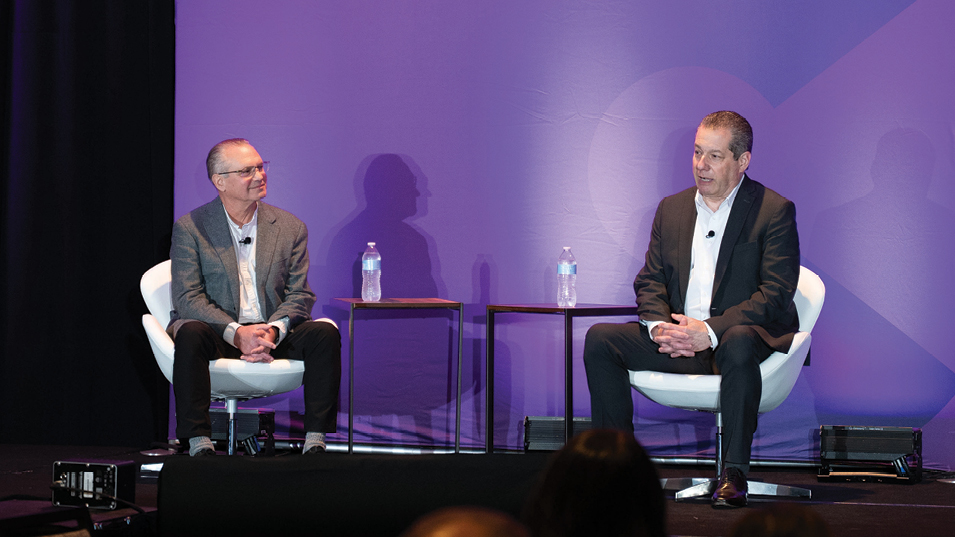
“Food safety is at the cornerstone of your reputation,” added Frank Gleeson, NACS president and CEO, as he kicked off the event, which took place in Chicago on April 13. “It’s not a competitive advantage; it’s table stakes. … If you’re serious about foodservice, you’ve got to be serious about delivering safe food.”
At the 2026 Food Safety Forum, retailers and foodservice suppliers gathered to discuss the risks involved in foodservice, how to mitigate them, and how to protect both their store’s brand reputation and, more importantly, customers’ health.
Culture Over Checklists
For Scott Zietlow, CEO, president and chairman of Kwik Trip, and Doug Yawberry, president and CEO of Weigel’s, food safety starts at the top.
Retail leaders need to build a culture of food safety both in their organizations and among their store teams. “You need to have buy-in from all the leaders in the company, and then it follows all the way through,” said Zietlow.
At Weigel’s, Yawberry said the company embedded food safety into every role, not just the foodservice team. Instead of allowing district managers and store leaders to remain removed from food operations, the company requires anyone with a leadership position to work through a food role before advancing.
“Most of it is fear because they don’t touch it,” he said, referring to store leaders’ past hesitation around food operations. “But when they understand the ‘whys’ … it becomes inherent in them.”
Both CEOs emphasized the importance of training and how it needs to underscore the reasoning behind food safety decisions and protocols rather than just adhere to instructions. Yawberry noted that foodservice team members are often making quick, risk-based decisions under pressure while in the kitchen, so they are trained on both execution and reasoning.
Kwik Trip has also implemented AI and other tech to help with instant, on-demand training reminders for employees while they’re in the kitchen. “Let’s say there’s a new product out. Yes, employees have gone through the training, but they’ve only done it once or twice,” said Zietlow. The company’s education tool will “pop up real-time, just-in-time training, which shows you the video of how to do it again.”
One of the most practical strategies both leaders highlighted was simplification and reducing complexity to minimize risk.
Weigel’s invested heavily in a centralized commissary operation to take pressure off stores. Yawberry said the move reduced the number of in-store preparation steps, limited opportunities for cross-contamination and allowed employees to focus on execution and safety.
“When we start simplifying our operation … our store teams can focus on safety,” Yawberry said. However, he also noted that centralization concentrates risk. “It took 89 points of failure out of my system … and wrapped [them] into one point of failure,” he said.
While food safety is not a competitive advantage these days, a company culture that prioritizes food safety execution is, the CEOs emphasized. “It’s not that hard to do the right thing,” Zietlow said, but doing it consistently, sometimes across hundreds of stores, requires intentional leadership, tight systems and a culture where every employee understands their role in keeping customers safe.
Prioritize Risk to Reduce Incidents
About one in six people in the United States will get sick from foodborne illness each year, said Evan Powell, retail food protection manager at Kwik Trip, citing data from the U.S. Centers for Disease Control and Prevention (CDC). “That’s about 128,000 hospitalizations and 3,000 deaths.”
There are plenty of food safety risks an operator could focus on, but Powell and Donald W. Schaffner, Ph.D., an extension specialist in food science and a distinguished professor at Rutgers University, noted that not all risks are created equal. Operators can optimize food safety by adopting a risk-based prioritization approach instead of a strictly compliance-based approach.
“Risk is a function of probability and severity,” said Schaffner, explaining that operators should identify and mitigate risks that happen frequently and risks that cause the most harm.
Most foodborne illnesses are caused by five preventable failures:
- Poor personal hygiene (especially handwashing)
- Contaminated equipment
- Improper cooking
- Improper holding temperatures
- Unsafe sourcing
“If you manage those top five risk factors, you’re going to mitigate the majority of your foodborne illness risk,” Powell said. “You’re going to be in pretty good shape.”
Operators also need to be realistic about human behavior, which isn’t always perfect. While the risks are preventable, they’re amplified by factors such as high employee turnover, inconsistent training, time pressure in stores and increasing menu complexity. “Every organization is working with finite time and resources. If coworkers washed their hands every time they were supposed to, they’d spend about a third of their time doing it,” Schaffner noted.
Simplifying processes and reinforcing key behavior at the most critical, high-risk moments, like washing hands after handling raw meat or using the restroom, can help operators reduce risk more effectively than trying to enforce perfect compliance.
Powell and Schaffner said that most food safety programs are still focused on compliance, meeting standards and protocols or passing inspections. And while those things are necessary, a risk-based approach will reduce unnecessary complexity and improve food safety by focusing on high-risk and high-impact behaviors. Managing food safety risk isn’t about doing everything; it’s about doing the right things well, they said.
All Attention on Allergens
While foodborne illness is a systemic risk, allergens represent a different kind of threat—one that is immediate, personal and has the potential to be deadly.
“When we are talking about allergens, we’re talking about real people, real risk, real consequences,” said Craig of MenuTrinfo. “Allergen incidents can cause life-threatening harm, and they can do permanent damage to your brand’s reputation.”
About 33 million Americans have food allergies, she said, and the number has more than doubled in recent years. To add to that, every person with a food allergy’s friends, family and other members of the household might make dining decisions based on allergen safety, increasing the potential sphere of influence to as many as 85 million consumers.
One of the biggest contributors to allergen incidents is misinformation.
“The number one reason for recalls isn’t necessarily allergic items on the inside—it’s the wrong label on the outside,” Craig said.
That includes incorrect packaging labels, outdated ingredient info or miscommunication between suppliers and operators. Failure in processes and systems related to food ingredients or lack of clarity also significantly contribute to allergen incidents.
Consumers want to know that a foodservice provider can handle special requests, prevent cross contamination and accurately tell them that an item is safe for them to eat in their store. “They might ask an [employee], ‘Hey, does this have this ingredient in it?’” Craig said. “They’re not necessarily asking you about the food … they’re asking you about your system.”
According to industry data cited during the session, more than half of guests with food allergies have experienced a reaction even after informing staff of their condition—meaning the retailer lacks the proper systems to prevent allergic reactions, Craig said.
It reinforces the need for redundant checks in labeling and food prep protocols, standardized processes, clear documentation and all employees being equipped with the proper allergy knowledge, she said.
“You cannot rely on people remembering,” Craig said. “You have to have policy.”
Additionally, ingredients may be safe, but if the environment they’re prepared in is not, then cross contamination can also lead to severe incidents. Because of this, some operators are rethinking production strategies, exploring dedicated areas or even separate facilities for allergen-free products.
Staff training on allergens is critical to preventing potentially life-threatening situations. Employees must have access to clear, documented answers about ingredients and allergen safety and have the confidence to communicate them accurately to customers, Craig said.
More Innovation, More Complexity
“The pace at which the food industry has changed over the past 10 years is significantly faster than what it did even the 10 years prior,” said Nancy Wilson, senior director of quality assurance, risk management and safety at Wawa.
As retailers expand menus and push into more fresh prepared food, they are also expanding operational complexity. New ingredients, new equipment and new preparation methods can in many cases introduce new risks.
“The question is not whether we’re going to innovate,” said Wilson. “It’s how we innovate and keep food safety as a core pillar.”
The growing complexity of the supply chain is one of the main factors impacting food safety challenges and it can directly affect risk at the store level. Products are moving through more hands, more facilities and more processes before reaching the store, and each step introduces potential failure points.
“Supply chain complexity is one of the top reasons we’ve had an increase in Class I recalls,” Wilson said, noting that severe recalls have risen significantly in recent years.
Retailers need more visibility than ever: “How much of your supply chain do you really know?” she asked.
Wilson and other presenters underscored the need for strong, trusted supplier partnerships, emphasizing that retailers can’t manage risk in isolation. Because when something goes wrong, the customer doesn’t blame the supplier. “Your name is on that product,” Wilson said.
Jill Sump, FSQA supply chain manager at Casey’s General Stores, said that retailers and suppliers need alignment on standards, accountability and culture. Suppliers shouldn’t be treated as transactional vendors, but as partners who are integrated into the retailer’s food safety system and expected to meet the same standards for food safety protocols, communicate openly and continuously improve.
“When we align on strong supplier standards, share best practices and prioritize food safety culture, we don’t just protect our guests—we raise the bar for the entire industry,” Sump said. “It takes all of us, working collaboratively, to build consumer trust.”