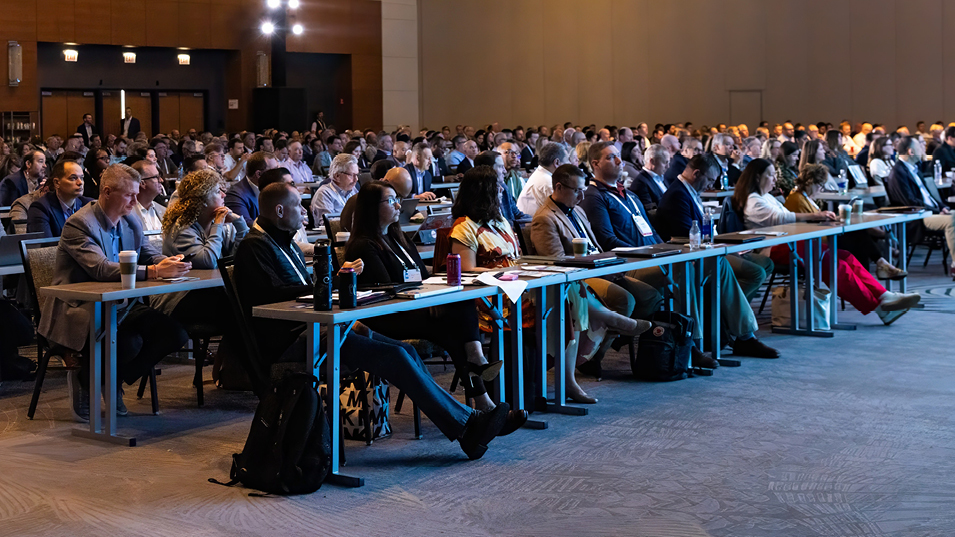
There is no question that the theme of the 2025 NACS State of the Industry (SOI) Summit was uncertainty. Last year’s event took place as the stock market was roiled by President Trump’s announcements—and subsequent modifications—of tariffs.
Now, a year later, there is even more uncertainty caused by more global events—but uncertainty was not a central theme of this year’s SOI Summit. The question is, was that because everyone’s now accustomed to uncertainty or are they better able to manage it? It’s likely a combination of both.
Several themes did emerge at this year’s SOI Summit, but the most prominent was this: The consumer who is in your store isn’t the same consumer who was in your store 10 years ago, or five years ago, or even last year. Speakers at the SOI Summit shared game plans for success that focused on understanding today’s consumer needs and tailoring retail offers to capture revenues—and profits—at a time of, well, uncertainty.
1. Everyone Wants Value
Today’s consumer has less spending power. Those tariffs that were such a hot topic a year ago have cost the average American household $850 in higher prices, and elevated oil prices are driving up not just the cost of gas for their own cars, but the cost of transportation for all goods and services.
These—and other financial concerns—are taking their toll on consumer spending. Nearly 40% of convenience customers surveyed say that they have changed how they shop because of their financial situation, according to the 2025 NACS Convenience Voices annual study of convenience shoppers.
There is a definite correlation between how consumers feel and how they spend, according to Chris Rapanick, managing director of NACS Research. Inside transactions at c-stores decline when consumer sentiment drops, he said.
Despite significant financial headwinds facing much of the population, total U.S. consumer spending is actually up. “Spending is up, but not for everyone,” said Thomas Weinandy, principal research economist for Upside.
Lower-income consumers are cutting back and upper-income consumers are spending more, leading to what is known as a K-shaped economy, in which one line goes up and the other goes down.
No matter what their economic situation is,
consumers are seeking out value. For many consumers that means price. The good news is that while consumers have noticed higher prices at quick-service restaurants (QSRs), they haven’t noticed them at convenience stores, said Caitlin Root, executive vice president of customer experience at Datassential.
But value does not mean the lowest price point. Customers will pay a premium for products or services that are life-balancing. They will also seek out stores that have modern, well-maintained facilities and better food. According to Marco Valentini, managing director at Alvarez & Marsal, 56% of consumers say they are trading up for quality ingredients and 40% report trading up for health benefits.
The bottom line is that “consumers are stressed,” said Andrew Baill, Wawa’s senior category manager of fresh beverages.
But there also could be opportunity with that stress. What do people do when they are feeling down? Half of them say they have a snack, said Datassential’s Root. She encouraged retailers to pay attention to the “little treat culture” in which consumers are spending on affordable luxuries that help them boost their mood.
Whichever way people define it, “Value is a trend that’s not going away,” said Rapanick of NACS.
2. Foodservice Is the Future … But There Are Challenges
Foodservice continues to be a key profit driver in the store, representing 28.5% of in-store sales—and 38.9% of in-store profits. Foodservice includes prepared food, commissary and hot, cold and frozen dispensed beverages. If all five foodservice categories were ranked within the top ten merchandise categories, all except for commissary would fall into the total in-store top ten in terms of sales.
Foodservice also has seen enormous growth within the industry. Part of that growth is because of how well it aligns with what consumers want—and expect—at stores.
“Foodservice delivers two of the three need states, ‘I’m thirsty, I’m hungry,’” said Baill. (The third need state is fueling/charging; more on that later.)
However, there are challenges. Adjusted for inflation, c-store foodservice sales were down in 2025.
More alarming, while c-stores offers are often on par with that of quick-service restaurants, one in three c-store customers are going to a QSR within 30 minutes of leaving a c-store, according to NACS’ annual Convenience Voices study. This trend has been increasing over the past five years—it is a worrisome trend as QSRs up their offers to meet the competition.
The QSRs are innovating and c-stores need to keep up with them, said Nancy Wilson, Wawa’s senior director of quality assurance, risk management and safety, during the Food Safety Forum, which took place immediately before the SOI Summit.
Consistency also is critical. There is an enormous difference between top-decile and bottom-decile performers by profits, and much of the difference can be attributed to foodservice and how it’s executed. “The biggest gap in foodservice is around consistency,” said Mike Wilson, chief operating officer at Cubby’s (and no relation to Nancy).
“This is not a knowledge issue. This is a consistency issue. Everyone knows what to do. It’s a cultural issue,” Mike Wilson said.
A focus on food safety is also critical.
“Food safety cannot be a priority. Priorities can change. It needs to be foundational,” said Amy Costello, director of food safety and quality assurance at Casey’s, during the Food Safety Forum.
“We want to keep the hospital out of hospitality,” added Betsy Craig, founder and CEO of MenuTrinfo at the Food Safety Forum.
Despite the challenges related to c-store foodservice, 2026 looks promising. While overall foodservice sales across all channels are expected to grow 1.1%, foodservice sales at c-stores are projected to grow at 1.7%, said Datassential’s Root.
3. Fuel Saves the Day
“With fuel, everyone’s fine. Without fuel, everyone’s exposed,” said Charlie McIllvaine, chairman and CEO of Coen Markets and moderator for the SOI Summit.
The numbers support his point. NACS Research calculates that the profit associated with the typical in-store basket, after subtracting all expenses, was 1 cent per transaction in 2024. In 2025, it shifted 8 cents lower, meaning that every transaction inside the store lost 7 cents. Simply put fuel sales—specifically fuel margins—were the reason that stores were profitable in 2025.
More accurately, fuels and in-store sales work in tandem and support each other.
“Don’t let fuel be a shield” that masks bigger operational problems, noted Valentini.
Mike Wilson was even more blunt, noting that there are now two business models in the industry.
“One is fuel-supported retail. The other is retail-supported fuel. If fuel tightens, that whole model falls apart,” said Wilson.
Could fuel tighten? The conflict with Iran will have long-term ramifications well after hostilities end, said Denton Cinquegrana, chief oil analyst for OPIS. He said that the longer the conflict goes on, the more likely there will be more damage to the petroleum infrastructure in the Middle East. He also said that he expects it to take a minimum of 12 weeks for normalization after hostilities end—with increased world demand through early 2027 to build back depleted inventories.
While the U.S. does not currently have a supply problem, that could change in the coming months. “I worry about the West Coast and a little about the East Coast later this year for gasoline supply,” said Cinquegrana.
And as far as pre-war prices that were below $3, “Kiss that goodbye for 2026 and the start of 2027,” Cinquegrana said.
Elevated gas prices also could lead to a shift in how gas consumers shop. The average American used to have to work four minutes to pay for a gallon of gas. Now it’s up to six minutes (at $4.00-plus a gallon).
Long-term elevated prices could push drivers to put more of a focus on finding the lowest price, a trend that Cinquegrana has already seen.
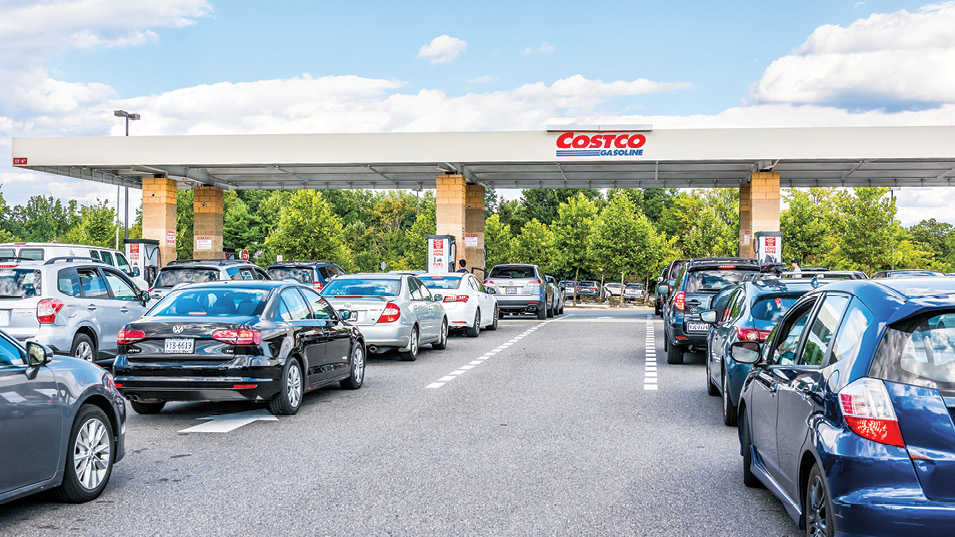
“I see people waiting an hour in line to save 20 cents per gallon at my local Costco,” he said.
4. The People vs. AI
While the average c-store basket increased 24 cents to $7.69, expenses rose faster.
For the second straight year, direct store operating expenses have increased at a faster rate than inside gross profit—and three or more years would be a problem, said Rapanick.
Chief among those costs is labor, which is responsible for $1.60 per in-store transaction. AI could provide relief to growing expenses—but it’s still early to determine when and how to best use it.
“Just as mechanization, electricity and computers changed jobs, so will AI,” said Weinandy. “We just don’t know when.”
AI could be an option to help trim expenses, but it will be important to measure its success, said Rapanick.
There are other impacts. AI also is changing how customers interact with stores, said Mike Templeton, a partner with NexChapter. Consumers are now engaging with AI to serve as their agents and guide them to their shopping destinations, just as a GPS guides them to the endpoint of their journeys. “We’ve spent decades optimizing for people. Now we must also optimize for AI that guides their decisions,” said Templeton.
The most important factor to consider with AI is how it makes the customer experience better—and differentiates your offer from the competition.
5. Be Unique and Unrepeatable
Convenient choices are everywhere, whether at nearly 152,000 c-stores, 220,000 QSRs or 40,000 dollar stores—or with any other retailer that sells convenience.
“It’s a sea of choices out there. How do you pierce that frontal lobe” and get consumers to think about your offer, asked McIlvaine.
“If you don’t have a value proposition, it’s tough to compete,” added Rapanick.
So how do you compete? Define what you stand for—and can do better than anyone else.
“Be unique and unrepeatable” is how 2025-26 NACS Chair Annie Gauthier, CFO/Co-CEO of St. Romain Oil Company LLC (dba Y-Not Stop), put it.
Gauthier said that more than 80% of the items sold in her stores are sold at every other c-store in the country. So how do you differentiate your offer and create loyalty?
“Customer experience drives loyalty,” added McIlvaine, a topic that was the focus of keynote speaker Brittany Hodak, author of “Creating Superfans.” “Every employee is in the experience business,” said Hodak—and how your employees are part of that customer experience will define your success. “It’s been a while since I bragged to friends about saving $1.50. But I have shared stories about great customer service,” she added. And it’s probably true for all attendees.
Good isn’t good enough in terms of what consumers expect today. Or to put it in Hodak’s memorable phrase: “Good is good enough to be forgotten.”
What’s Next
The good news is that retailers have a lot of levers to pull to attract customers and grow their businesses. More importantly, they have resources.
“This is an industry that shares,” said McIlvaine, encouraging retailers to network and build out their contacts.
Not only will that help grow individual businesses, it’s also good for the industry as a whole, said NACS President and CEO Frank Gleeson.
“The more you connect with each other at events—retailers and suppliers—the more we make each other better, and make the industry better. The more data you provide to our research team, the better this event is—and our ability to tell our industry’s story, whether on Capitol Hill or with the media,” Gleeson said.
.jpg?language=en-US)