Atlantis Management Group (AMG) operates more than 300 locations in the New York City and New England areas. It’s the opposite of a one-size-fits-all company, flying a variety of flags, operating as a wholesaler and striving to maintain small operator ingenuity. Even its flagship convenience store concept, Atlantis Fresh Market, is built to be flexible, offering guests a similar experience across a variety of store sizes.
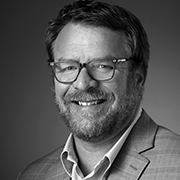
CEO Tumay Basaranlar, President Jose Montero and Vice President Jimmy Kochisarli, the company’s three co-founders, spoke with NACS about the company’s origins and its plans for the future—as well as how its New York City roots have shaped its business strategy.
Let’s start at the beginning. Tell me the origin story of Atlantis Management Group.
Tumay Basaranlar: Jimmy and I are cousins, with a four-year age difference between us. Our relationship has always been more akin to that of brothers. In 1999, while I was working at Merrill Lynch on Wall Street, Jimmy was completing his education.
It was during this period that we decided to venture into the gas station and car wash business. Our interest in this industry was sparked about a decade earlier through Jimmy’s parents’ involvement in the gas station sector.
In 2004, we sold our car wash, which provided us with capital to explore new opportunities. We subsequently acquired a three-station deal in the Bronx and Westchester. This transaction introduced us to Jose, the seller.
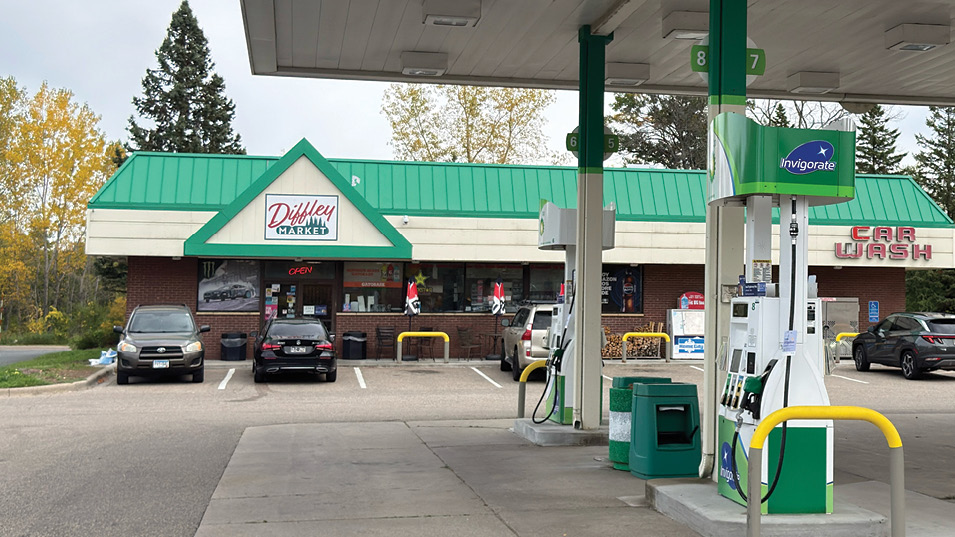
Jose, who was contemplating retirement at the time, formed a strong connection with us during the negotiation process. Our relationship quickly evolved from a professional acquaintance to a close friendship. Jose’s extensive experience in the industry—over 20 years as a significant Amoco/BP dealer—proved invaluable.
Given his comprehensive knowledge of the New York City gas station market, Jose became an indispensable source of information as we operated the sites we purchased from him. During this period, Jose was considering his retirement plans, frequently traveling to the Dominican Republic.
A pivotal moment occurred when BP approached Jose regarding a location on Webster Avenue in the Bronx. He invited us to participate in a partnership for this new-to-industry location. We eagerly accepted, recognizing it as an excellent opportunity to partner with Jose and continue benefiting from his wealth of industry knowledge.
This single site, which we began developing in 2005, became the catalyst for our current network of over 300 convenience store locations and 32 Dunkin’ restaurants. It marked the beginning of our significant expansion in the industry.
Just from talking with you all for a couple minutes, I get the impression that it’s business and it’s tough, but it’s also a lot of fun.
Basaranlar: I mean, this is truly beyond our dreams. When Jimmy and I started, we were thinking about maybe five stations, but this has turned into something far more extraordinary.
Jose Montero: It’s been an incredible ride. Not only have I had the opportunity to partner with two guys who feel like additional brothers, but we’ve grown this venture together. We’re constantly expanding—adding more locations, bringing in quality people. What’s remarkable is that we still have team members from our very first day. We see this as more than a business; it’s a family, and that’s made this journey incredibly special.
Basaranlar: It’s somewhat unconventional, right? Two Turkish guys and a Dominican guy, all from different generations, coming together like this. I can tell you, there were plenty of people in the beginning who bet against our success.
What about the culture at Atlantis has allowed you to grow? What’s in the DNA that has allowed you to succeed the way you have?
Basaranlar: Our organizational growth is fundamentally driven by our human capital. While the foundation begins with our leadership, it rapidly extends to our exceptional management team. We’ve deliberately constructed a family-oriented culture that emphasizes loyalty and an extraordinary work ethic. Some might characterize our approach as scrappy, others as pure hard work. Our core principle remains consistent: No one will outwork our team.
This approach is intrinsically linked with a robust, growth-oriented strategic mindset. Our track record speaks volumes—the number of stations we’ve developed and the strategic acquisitions we’ve completed over two decades demonstrate our commitment. Equally important has been creating a warm, inclusive work environment that cultivates a genuine sense of belonging.
The result is a profound level of employee dedication and loyalty that flows bidirectionally. Our team has evolved alongside the organization, developing deep insights into our business model, understanding our unique differentiators and consistently driving innovation. This is the essence of our organizational philosophy: Every individual is significant, not merely a statistic.
Our managers and district managers embody this spirit, approaching their roles with warmth, engagement and a deeply human perspective. They don’t just manage; they genuinely care and treat the business as their own personal endeavor.
Jimmy Kochisarli: To complement this perspective, I’ll emphasize our proximity to operations. As company founders, we can enter any store and personally know every manager by name. Our employees recognize us, underscoring that we are not distant corporate executives but actively engaged leaders who invest substantial time directly into our stores.
Is it a point of pride that you’ve been able to succeed in New York City?
Basaranlar: I often try to explain to people in our industry what it’s really like to do business in New York City, and sometimes they’re genuinely flabbergasted by the different variables at work.
Operating in New York requires a constant level of vigilance and adaptability. The market never stands still. There are always new entrants, new concepts and new variations of competition coming at you from every direction. Not only on the fuel side, but especially in food and convenience.
You’re competing in a market that has some of the best pizza in the world, the best bagels, the best burgers and arguably the best of almost everything. The customer has an extraordinary number of choices and their expectations are incredibly high.
So competing here isn’t simply about being a good convenience store. You have to earn the customer’s business every single day. You have to continually evolve, stay relevant and give people a compelling reason to choose you when they have so many great alternatives.
On top of that, as our people are impacted by a high cost of living, the business has to absorb tremendously high occupancy costs while battling relentless competition and a very high regulatory environment, especially with cigarettes and tobacco. Not to mention the labor costs that outpace the industry in most other areas of the nation. So, you must adapt.
Although it is very difficult, it is equally rewarding when you can get it right and you’re able to pull it off. Overall, it’s made us much nimbler, much quicker.
And we had a great ace in our back pocket and that was Jose, because he had been doing business in this market and all the boroughs for 20 years plus when we got together. We knew how to make money in ways that other people didn’t. Jose would run parking lots at some of his gas stations, for example.
We were able to bring other alternative income sources to these locations through his experience. His knowledge, over the years, of how to operate in these locations, which locations had the better traffic flow, how to pick the locations, was an insurmountable advantage for us.
It’s a small operator mindset.
Basaranlar: We try to keep that mindset even today, which is not always easy.
You have a lot of diversity in terms of all the different sites you’re running and jobbing, and then your signature store, Atlantis Fresh Market. How do you juggle those two?
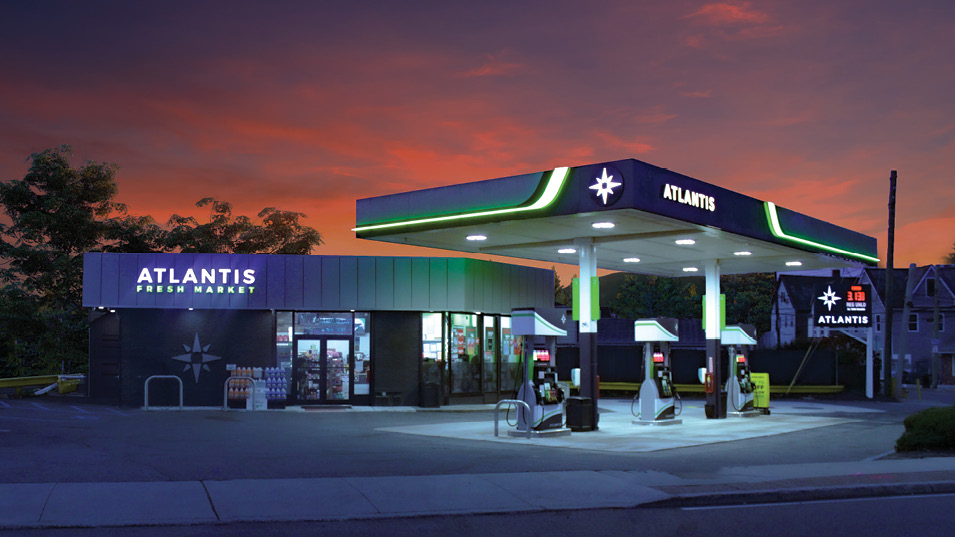
Basaranlar: We embarked on developing the Atlantis Fresh Market concept in 2015. It was then that we sensed that there was a dynamic shift happening in our business. The convenience store became more and more important, and that’s when we realized we needed to start branding our convenience store.
The vision was to create a modern neighborhood convenience store that delivers a consistent customer experience across a very diverse real estate portfolio. Because our network was built largely through acquisitions and roll-ups, our stores vary significantly in size, configuration and location. We don’t have the luxury of a standardized 4,000- or 5,000-square-foot prototype.
So rather than trying to make every store physically identical, we looked at Starbucks as the model. Starbucks operates in many different formats and footprints, yet when you walk into one, you immediately recognize the brand and know what kind of experience to expect.
With regards to Atlantis Fresh Market, what are you proudest of in terms of how you’ve been able to develop that concept?
Basaranlar: What we’re most proud of for Atlantis Fresh Market is the fact that it’s internally designed and developed. We did it ourselves. We have our fingerprints all over the project and therefore it’s closer to home. So even today, we rebrand five to seven existing sites to Atlantis Fresh Markets every year, and the team designs based on the existing footprint of each location.
In terms of diversity of assets, that comes from the way we built the company, through acquisition. Diversity of brands comes from the notion that we wanted to optimize the offering to the customer base with various brands in different locations. But all this has made us a lot more resilient. A lot of people on our team know how to take on these sites, transition these deals with different assets, different sizes, different scales, and our growth has brought a lot of knowledge to us in regard to streamlining that acquisition process.
What’s in the future for Atlantis? What are you most oriented toward right now?
Basaranlar: There are two main focuses for us. One is a food focus, and the other one is leveraging technology. The food focus is near and dear to our heart, because one of the ways we differentiated our company and brought it to the forefront of our geographical footprint early on was by becoming a Dunkin’ franchisee.
One of our claims to fame was in 2008 when we bought 16 locations from BP. We thought that Dunkin’ was a very strong way to differentiate our offering from everybody else. During that time, a lot of people were still in the mechanic/500-to-800-square-foot convenience store business, especially in New York City. So we all of a sudden went to a bigger convenience store with a national brand in Dunkin’. It catapulted our growth. The combined offering of an Atlantis Fresh Market and a Dunkin’ is a very strong competitive offering.
As you can imagine, we can’t put a Dunkin’ in every location that we have. There are proximity issues with other Dunkin’ restaurants that are already in the area, especially as we grow in New England. So we’ve started a targeted food offering that offers pizzas, empanadas, chicken wings, chicken fingers, sandwiches, hot sandwiches. It’s getting the job done, but it’s a significantly rapidly evolving category and we understand that we need to figure out how to become an expert in the food program.
The second priority, in terms of company focus, which would be equally important, or even more important, is how we leverage technology.
Kochisarli: Our investment in technology is substantial. In many ways, we operate like a quasi-technology company with a convenience business focus. I don’t know too many companies our size that have their own IT department with a development team (meaning code writers). We also manage our digital marketing campaigns and all marketing efforts internally.
Our loyalty program is a significant initiative for us, serving multiple purposes. We employ what we call hyper-targeted marketing, utilizing our platform to track customer spending patterns, purchasing behaviors and basket sizes. This allows us to create tailored value propositions for our customers.
And these value-driven offerings are becoming increasingly central to our strategy. For instance, we’ve seen great success with promotions like “buy two energy drinks and get 10 cents off per gallon of fuel.” We’re also implementing discounted programs around energy drinks and sodas, featuring 99-cent offers and free giveaways. These initiatives have significantly boosted customer engagement.
We meticulously measure the impact of these programs, analyzing ancillary income, basket sizes and customer visit frequency. Our goal is to position ourselves as a destination, ensuring our customers don’t hesitate to choose our stores. I believe our loyalty program has been instrumental in maintaining high levels of customer engagement.
Many of our app offers are value-driven, as well. We’ve also introduced Fresh Pay, a direct payment feature through our app that provides customers with a daily 15-cent discount. This has been tremendously successful. We would rather make less on our customers per trip but have them visit our stores more frequently.
Basaranlar: We’re continually evolving our technological capabilities, such as exploring AI technologies to predict customer purchasing behaviors and optimize our strategies accordingly.
We focus on the power of data. We like to use the term “democratize data.” We have put meaningful data into the hands of our teams from our category managers, marketing, accounting, loyalty and fuel. By empowering these teams, they have been able to bring insights into areas that were previously untapped. We started by centralizing our data from different systems and creating useful dashboards, but that evolved into using AI to enhance the analytics and tease out answers that sometimes we didn’t even know we were looking for.
We have created force multipliers across our teams and created a culture of leveraging data to make smarter decisions.
We haven’t used the word ‘relationships’ very much, but it’s a theme that keeps coming up. The three of you, your core leadership team, the QSR aspect, your tech partners, the oil companies—this is a relationship business.
Basaranlar: Look, it really starts with the three of us and then our executive team. These folks aren’t just colleagues—they’re like family. We spend a tremendous amount of time together, not just in business settings but outside of them, too. There’s an incredible level of trust and loyalty between us. We always say our team is our biggest asset, and we wouldn’t trade them for anybody else’s team. They know it, and we know it.
When it comes to partnerships, we’ve put tremendous effort into developing relationships with third-party connections—oil companies, distributors, vendors, Dunkin’. Jose had built some incredible connections early on, and Jimmy and I have continued to build and nurture those relationships over the years.
Another crucial relationship is with our financing partners. We’ve always been transparent with our banks—clear about our objectives, our business plan, how we want to maintain a healthy organization while growing sustainably. I think we’ve done a pretty good job so far, and we plan to keep it that way.
But here’s the most critical thing: our relationship with customers. We’re obsessed with ensuring every single customer knows we’re working hard to make them happy. We want a completely smooth transaction where they can get in and out of the store with a smile. That means we’re constantly focused on our frontline employees because they’re literally the face of Atlantis to our customers.
We’ve got a great foundation to grow from in terms of sites, people and overall organization.
Our mission? To become one of the premier convenience store networks in the Northeast. And honestly, I believe we’re well on our way to achieving those goals.