That’s how one Polish retailer described his country’s businesspeople during a reception at NACS Convenience Summit Europe (CSE), held this year in Warsaw.
CSE is all about inspiration. It might come from store tours, sessions on the stage or informal conversations with colleagues.
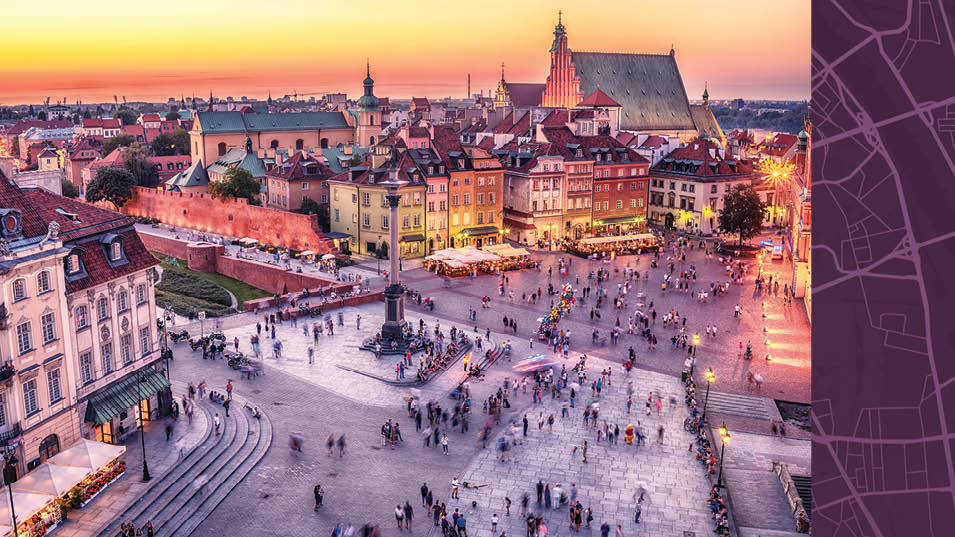
This year inspiration came from the city itself. To walk Warsaw is to see a success story. The city is reinventing itself. It’s vibrant, prosperous (more on that in the sidebar “5 Facts to Understand the Polish Consumer”) and remarkably safe and clean.
Walking Warsaw also means seeing a very specific, c-store centered success story. Zabka leads the way when it comes to convenience, with about 12,000 or so stores in the country and one on every corner (it seems) in Warsaw. In late July, Couche-Tard bought a controlling interest in Zabka for $8.6 billion—despite Zabka not selling a drop of fuel.
Getting To Know Orlen and Zabka
While it’s a competitive and dynamic market, the Polish convenience and fuel retailing landscape is defined by two clear market leaders: Zabka for convenience and Orlen for fueling sites.
For Orlen, with almost 2,000 fueling sites in Poland and retail operations in six other countries, the key word, is “ecosystem.” It’s all part of a push to diversify. That’s according to Agnieszka Bobrukiewicz, who leads the company’s convenience operations.
“We have two choices now,” said Bobrukiewicz. “Either we wait, and of course fossil fuel one day is going to drop. Or we don’t wait. We don’t want to wait. We want to build non-fuel to be as strong as the fuel business.”
Drilling down into the consumer side of Orlen, the company offers everything from home insurance to smart-home systems to grocery delivery to energy for home and businesses in addition to its mobility fuel and convenience stores. The Orlen app is the hub to connect these different businesses into “one integrated ecosystem.”
“What is the difference between what we have now and what we aim to have? We want to put all our services in one app,” Bobrukiewicz said. “So not only discounts for fuels and for our hot dogs, which we sell so much of, but also electromobility, convenience of course, partnerships, and an integrated energy and gas offer. Let’s say you refuel in an Orlen station, not only do you have a good coffee bar, we can give you a great discount for energy and gas for your home or your office.”
The physical store itself is an ecosystem, with the potential to have bike washing stations, parcel lockers, vending machines, a standalone automatic pizza shop, and even washer-dryer machines on site in addition to the convenience offer.
As part of extending past mobility fuel, Orlen is leaning into a presence at festivals and other large events where it sets up a foodservice offer or coffee bar. “Our focus is first, create amazing petrol stations in terms of offer and design, and then go outside the station and promote it and create great events and let people try our products. Going outside the station is a strong focus now,” Bobrukiewicz said.
Jan Kisielewski, brand and customer strategy director, Zabka, struck some of the same notes. Again, “ecosystem” is the key word. As part of building an ecosystem, the Zabka portfolio includes Maczfit, which delivers customers’ food for the day, freshly cooked, to their door each morning; Dietly, a platform for comparing and ordering meal plans; Zabka Jush, an urban fast-delivery e-commerce platform for products from Zabka and its partners; and Delio, a similar delivery service for outside urban areas.
And there are services, too. They “go far beyond being a small format store,” Kisielewski said. “You can collect and send parcels from Zabka, you can buy insurance from Zabka, you can even bring your iPhone when it’s broken and leave it at Zabka and get a renewed phone after a few days.” The company continues to build out additional offers, including the ability to purchase tickets for events. The goal is to create “1,000 reasons to go to Zabka,” Kisielewski said.
All of the above contributes to Zabka being an “everyday hub,” whether the customer is in the store or on the app.
“We are fighting and competing against other apps that every customer has in their pocket. We want to be an app people visit at least once a day, not just keep in their pockets,” Kisielewski said.
Remember that Zabka does not sell fuel. Its 12,000 or so locations in Poland (plus a few hundred in Romania) draw traffic exclusively for the convenience store offer—and it does 4.3 million transactions per day.
Despite having 11,000 franchisees, Zabka has a strong brand persona—one that came through in its stores even with the language barrier. Kisielewski described the persona as “courteous” and “optimistic, with a sense of humor.”
The system that makes that almost one-to-one franchise model work feels like the secret sauce for Zabka. Of course, Kisielewski couldn’t share granular operational details, but he did cite the company’s heavy investment in technology as key to its success. “The data we collect and analyze is unique and exceptional. We can support our franchisees with a complex system powered by AI so they can easily, for example, complete orders and get deliveries and know exactly when the deliveries will come to the store,” he said.
Leadership Insights
Debbie Robinson received the NACS Convenience Industry Leader of the Year Europe award during NACS Convenience Summit Europe.
Robinson heads the UK-based conglomerate OurCoop, which has 500 retail sites while also offering a range of other services, including utilities, travel planning, and daycares.
She was joined on stage by Henry Armour, NACS chairman emeritus & CEO international. Highlights of the conversation included:
- “The leaders that I respond best to are the ones that leave you to it.” Robinson contrasted this leadership style with one that “at every minute is asking you to justify every moment.” Her journey, she said, has led her to a servant leadership mindset: Her role is to “help people fly.” Of course, that doesn’t mean everything is rainbows—accepting the need to make hard decisions and have honest conversations is part of having a servant leadership approach.
- “In any job I’ve done, always look for a difference. What is it that you’re doing that no one else is?” Robinson cited how at the OurCoop childcare, every care provider is first-aid certified.
- “Everybody has the right to know what is expected of them.” Making sure people know what’s expected isn’t straightforward. While some are capable of “operating with a high degree of ambiguity,” others need “absolute clarity of their role and responsibilities.” For your teams, ask where each person falls on this spectrum and if they have enough guidance.
- “If you see talent in your organization, grab it, reward it, develop it.” Have a sense of urgency; don’t delay or leave any doubt what you’re doing. “If you find talented individuals that you can work with, they are truly priceless.”
Dare to Differentiate
It should be a point of pride for everyone in this industry that, collectively, we serve about half the population of the United States every day. But Armour warned: “It’s really easy in that environment to fall into the trap that I have to be all things to all people.”
The result of falling into that trap: “The element of differentiation isn’t there.” That’s not great for consumers. It’s not great for the industry as a whole either, which dissolves into what Armour describes as a “sea of sameness.”
As Armour and Mark Wohltman director of NACS Global, built the Warsaw walking tours, they chose an assortment of coffee shops that illustrated how caffeine purveyors in Poland are differentiating. It’s not apples to apples with convenience, but the idea behind including coffee shops was to sharpen thinking and build conversations around that critical factor of differentiation.
- Green Caffè Nero leans into a cozy British library aesthetic, complete with overstuffed chairs and shelves full of books. It’s a common sight in Warsaw. The aesthetic is so intentional that it’s built into the franchise model, with operators required to invest certain minimums every year into décor.
- Coffeedesk feels technical and Scandinavian. There are fewer of these stores, but Coffeedesk has a booming online trade based on its position as a coffee authority. When you walk in the door, you’re met with a wall of expensive coffee makers that are for sale but also serve as a sort of mission statement.
- Vincent mimics a French pastry shop—you might be in Paris in the 1920s. Like the other coffee purveyors in Warsaw, this isn’t a half-hearted attempt to have a little personality. A clear brand persona is a high priority and executed across all aspects of the shop.
- Most interesting was Tchibo, which is a full-fledged coffee shop but also a sort of mini-Target, selling items like clothing and household goods. It has a loyal following of customers who wait for each wave of new products. In some ways, Tchibo is the opposite of hip—and leans into that.
- The other side of the spectrum: About Matcha knows exactly who its intended audience is: People wanting to take selfies in the coolest drink shop in Warsaw.
Know your audience, even if differentiating costs you a few customers.
“There are very different types of fish in the ocean. Don’t try to appeal to every species of fish because then you end up with a sea of sameness. It really comes down to what makes you different. What are you famous for? And that comes down to what fish you are targeting. … ‘This is the fish I’m going after, and I’m not going to waste a lot of effort on the rest of them,’” Armour said.