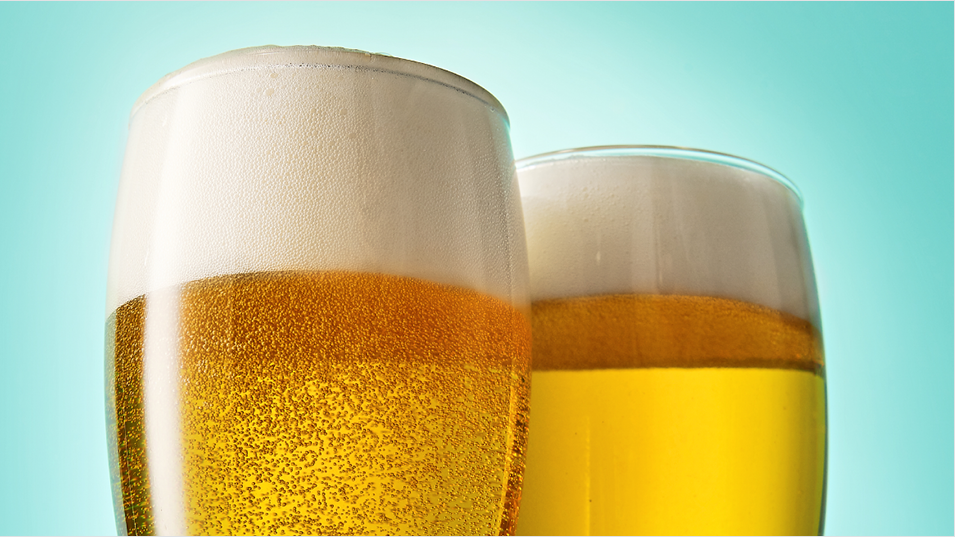
While beer sales have been languishing in convenience stores in recent years, the category remains a significant traffic driver for the channel.
Indeed, beer performs stronger in c-stores—a 43% share of beer sales across channels, according to NIQ—than in any other channel, further buttressing the importance of c-stores to beer marketers and their brands.
“While convenience stores are the largest off-premise channel, everyone has witnessed the impact of a softening beer category,” remarked Rebecca Dye Yonushonis, chief marketing officer at New Belgium Brewing. “Consumers are feeling challenged economically. Household incomes have declined, and a prevailing negative outlook on the economy means consumers are tightening their budgets,” she said.
Moreover, the fast pace of new product introductions has resulted in “an incredibly noisy and competitive category,” Yonushonis added. As a result, beer’s performance in c-stores “reflects a consumer who’s both overwhelmed by choice and more financially conscious.”
Crafts, Singles and Budget Brands Deliver Variety
Beer subcategory performance has been uneven in recent years. However, there are several bright spots.
For example, craft brews have expanded a bit, and Voodoo Ranger has emerged as a leader in the segment. New Belgium Brewing Company, which did not release a new product into c-stores is 2025, instead prioritized support for its Voodoo Ranger Imperial IPA and Voodoo Ranger Juice Force IPA within the channel.
According to Yonushonis, sales of New Belgium’s single-serve offerings increased 4% in 2025. The Voodoo Ranger portfolio comprises four of the top 20 craft singles in c-stores—led by No. 1 Imperial and No. 2 Juice Force—and combined hold a 24% share of craft single sales in the channel, she said.
At New England c-store chain Rusty Lantern, “craft beer remains relevant, particularly when it’s clearly differentiated and locally oriented,” remarked Keri Weekley, senior category manager. In fact, the chain offers its own private-label brew that “creates a clear reason to choose our stores and reinforces a more premium, curated beer image,” while increasing customer loyalty, she said.
NACS heat map data shows that beer purchases in c-stores are largely occasion based with the peak time frame between 4:00 p.m. and 5:00 p.m. on Friday afternoon. This purchasing routine is vital for beer singles, the most frequently purchased beer unit in c-stores. “Singles are essential to the c-store beer category because they sit at the intersection of habitual and impulse purchasing,” remarked Yonushonis.
While about 75% of c-store shoppers come in with a specific item in mind, roughly two-thirds end up buying something they didn’t initially plan on, the New Belgium executive said. Because of that dual behavior, c-store operators should work to both reinforce the habitual trip and spark impulse buys, Yonushonis suggested.
“With singles, it’s critical to stay in stock with familiar favorites and ensure that you have adequate days of supply to avoid any future out-of-stocks, particularly leading up to key selling occasions,” advised Simon Wuestenberg, chief sales officer at Anheuser-Busch. “Once the top sellers are in stock, you can look to add assortment on trending items,” he continued, pointing to A-B craft brands like Goose Island Beer Hug and Elysian Space Dust.
Other convenience retailers, meanwhile, report that with customers increasingly cost conscious, lower-priced budget beers are on the rise.
“Economic factors are definitely influencing customers to move to sale or lower-priced offerings,” shared Jason Neuhaus, director of retail at Rainbo Oil’s Kwik Stop chain in Iowa. Similarly, Sean Bumgarner, vice president at Missouri’s Scrivener Oil Co., parent of Signal Food Stores, said, “our economy beer is growing at a faster rate than other types of beer.”
And in Alabama, Brian Young, vice president, Young Oil, added that at his Grub Mart stores, with several locations in college towns, “budget beers are performing better than higher-priced offerings.”
Powerful Promotions
Whether it’s singles or multipacks, effective merchandising and promotions help drive beer sales. Yonushonis suggests “interrupting the shopper” by leveraging grab-and-go merchandising with eye-catching POS, competitive pricing, and secondary placements for incremental purchases. In addition, “endcaps, cold-vault clings, and counter-adjacent coolers help put singles front and center,” she said.
Bundling beer with other products is another win-win merchandising tactic. The cross-merchandising promotions “bring in consumers … and drive a lot of lift,” noted Jaime Polisoto, brand director for FIFCO USA’s Seagram’s Escapes and Seagram’s Escapes Spiked. Indeed, bundling beer with food is now “table stakes for c-stores,” the FIFCO executive said.
Digital promotions, where permitted, are on the rise in the beer category. Kwik Stop’s Neuhaus reports that his stores now utilize both scan offers and digital rebates. The scan offers allow the retailer to lower prices and promote in different ways while customers have been “very receptive” to digital rebates once they discover how they work, he said.
At Rusty Lantern, seasonal displays are among the merchandising strategies the chain uses for beer. According to Weekley, the displays are tied to holidays, local events and sports.
This summer’s FIFA World Cup—some of which is taking place in the United States—marks a “key occasion” for retailers to leverage beer promotions, said A-B’s Wuestenberg. “Retailers can capitalize by breaking through with clear and impactful messaging, both to capture consumers’ attention outside of the store and to break through in-store with signage and displays,” he remarked.
What’s Next for Beer in C-Stores
Economic uncertainty is just one of several headwinds facing the beer category. With the emergence of wine- and liquor-based ready-to-drink beverages, along with hemp-derived THC drinks—not to mention the legalization of marijuana in some states—beer is struggling to retain its share of the market.
Bumgarner of Scrivener Oil Co. notes that with the legalization of marijuana in Missouri, “we’ve seen some shifts away from alcohol towards marijuana.”
In many c-stores, slower-performing flavored malt beverages (FMB) are losing ground to a growing wave of wine- and spirits-spiked single-serve cocktails. While c-store operators like the improved margins the emerging products provide, Polisoto said that they may not be right for all drinks customers.
“Now more than ever, consumers still require value and quality,” said Polisoto. “A traditional FMB can offer consumers exactly that. It’s an affordable indulgence versus a wine- or spirits-based brand.” For its part, Seagram’s Escapes recently entered a multiyear partnership with professional wrestling promotion company WWE, including the launch of a co-branded Spiked product.
While inflation and new competitive products may be short-term challenges for beer, the overall health and wellness craze among so many consumers is perhaps an even greater long-term concern.
A Gallup poll released last year found that just 54% of consumers drink alcoholic beverages, the lowest percentage in Gallup’s nearly 90-year history. As recently as 2023, the figure stood at 62%. According to the poll, most Americans (53%) believe that moderate drinking—one or two drinks a day—is bad for one’s health.
Rusty Lantern’s Weekley said she is noticing “more moderation in alcohol consumption,” with some customers choosing fewer drinks or alternative beverages.
The use of GLP-1 medications for health and weight loss could also be having an impact on beer.
Retailers say they’re noticing changing habits among their customers when it comes to beer purchases, especially with “younger consumers” who “aren’t drinking as much as past generations,” said Young of Young Oil.
Rusty Lantern’s Weekley agrees, noting that younger adult customers have become more “selective” with their choices, which limits volume growth for beer. “Older customers are more consistent beer purchasers, especially of mainstream and light beer brands,” she said.