Marketers are increasingly committing to the idea that one plus one equals three. Combining brands allows marketers to appeal to loyal consumers and attract new ones.
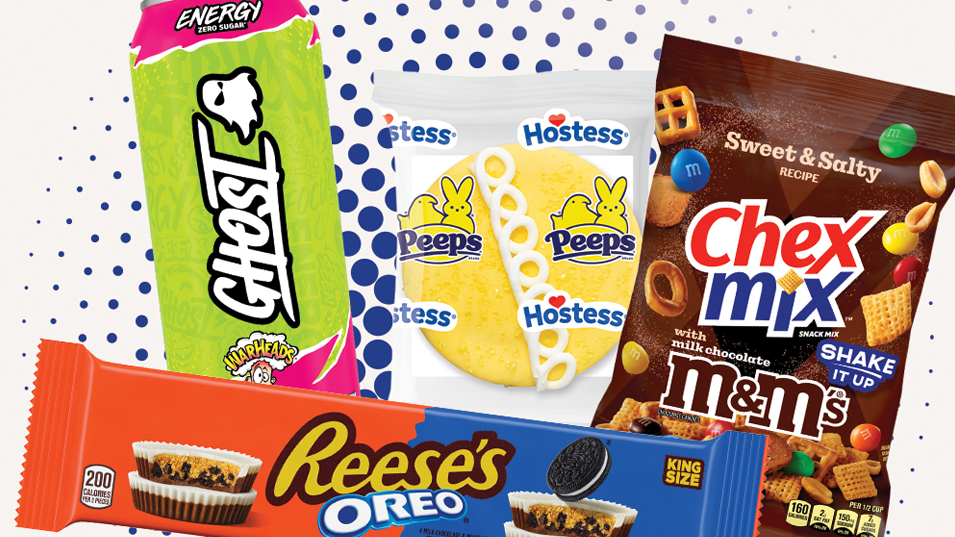
Now in its second year on the market, the Reese’s Oreo Cup is a collaboration between the Hershey Company and Mondelēz. Along with its companion product, Oreo Reese’s Peanut Buttery Creme Chocolate Sandwich Cookies, the mashup demonstrates how cross-category brand collaborations can drive consumer trial and impulse purchases in c-stores.
These kinds of CPG partnerships have been growing in number, becoming a running theme in new product launches. “Brand collaborations are growing because they combine discovery, scarcity and trust,” remarked Kevin Martello, vice president, foodservice and industry relations at Keurig Dr Pepper. The products are a good fit for c-stores as they deliver “affordable novelty,” while their limited availability drives trial and traffic, he said.
“As consumers, we’ve never been at such a point as now, where we’re approached by more products and more brands,” commented Jason Cantelli, chief commercial officer at Nutrabolt, the marketer of C4 energy drinks. As a result, companies search for creative and faster ways to attract consumers, he explained. “By co-branding with a product that has heritage within a consumer’s historical perspective, a marketer can pull them to the shelf,” Cantelli said.
For Hershey, the Oreo addition to the Reese’s line has delivered, company executives reported. “In 2025, 6.5% of households tried the product, tripling the trial rate of prior Reese’s launches,” said Melissa Blette, senior brand manager at Hershey. “Even more impressive, 35% of those who tried Reese’s Oreo Cups purchased them again.”
Nik Culver, director of category management, c-stores, at Hershey, added that the product—milk chocolate and white creme peanut butter cups with Oreo cookie crumbs—has “driven lapsed users back into the category, with 35% of purchasers being new to the chocolate category in the past year.”
Here Today, But Will It Stay?
Reese’s first partnered with Oreo more than 10 years ago on an LTO, and according to Blette, “fans have been asking for the partnership to return ever since.” C-stores have reported good responses to the new product.
“It’s no surprise that when two of our top sellers come together, the mashup performs extremely well,” added Bryce Proffitt, retail merchandising manager at The Market by Tiger Fuel in Virginia.
Not every mashup is meant to last forever. Sidd Singhal, business unit director for salty snacks at General Mills, said there is opportunity to expand LTO offerings “to tap seasonal apertures,” such as holidays and sporting events.
Peeps marshmallow candy is another confection that has been active in the collaboration space. Among the recent Peeps flavor lineup are mashups like Pop-Tarts Frosted Strawberry, Mike and Ike, SunnyD, Dr Pepper and Rice Krispies Treats. And the classic marshmallow treat flavor is making appearances in other formats too—Hostess debuted a Peeps Cupcakes this spring and Peeps-flavored CakeBites will be available in yellow and pink varieties for a limited time.
Convenience retailers note that many brand collaborations do best with a limited life span. “It’s important to see the product as a quick in and out,” said Nathan Arnold, director of marketing at Englefield Inc., the operator of Ohio-based Duchess c-stores. Even when some popular brand collaborations are expanded into year-round distribution, the novelty can fade.
Cross-Category Trend
Among other categories, salty snacks are also partnering with outside brands on mashups, including those that incorporate sweet flavor profiles, like Sweet & Salty Chex Mix with M&M’s.
General Mills has been marketing co-branded products for decades that combine products from its own brand portfolio, including a Lucky Charms/Cinnamon Toast Crunch Mix. “It’s great to be able to collaborate within our own four walls to give different brands exposure to different categories and consumers,” said Singhal.
The packaged beverage category has also seen quite a few brand mashups in recent years.
PepsiCo, for example, partnered with the Ferrara Candy Company’s Trolli candy on the Mountain Dew Zero Sugar x Trolli Cherry Lemon. Paul Andreotta, chief customer officer at PepsiCo Beverages U.S., said consumer response was very positive. “Mountain Dew and Trolli both have strong relevance with Gen Z, who are seeking bold, unconventional flavors and experiences that feel fresh and surprising,” he noted.
Energy drinks also benefit from co-branding. Six-year-old C4 Energy has partnered with several other brands to create mashups like the C4 Performance Energy x Jolly Rancher collaboration with Hershey. Cantelli remarked that the collaboration has been “outstanding for us. … In a category like energy drinks, that is driven by flavors, a collaboration with a known product can help stimulate trial,” he said.
Brand collaborations have also made their way into c-store foodservice. At the 2025 NACS Show, Johnsonville showcased the Dr Pepper Inspired Sausage LTO for c-store roller grills, supplemented by distribution to other retail outlets.
“It’s an exciting, new and different space for us,” remarked Kim Main, senior director of channel marketing at Johnsonville. Because the company is focused on flavor innovation, “it made sense to pair the No. 1 sausage roller grill item with the fastest-growing soft drink, two products that are endearing to c-store consumers,” she said.
While initially planned as an LTO, availability of the Dr Pepper Inspired Sausage could be expanded based on consumer response, said Main, adding that in addition to building sales of Johnsonville sausage, the product’s collaboration with Dr Pepper is likely “to bring new customers to the roller grill.”
Bigger Baskets
CPG marketers and c-store operators say brand mashups provide a number of benefits for the channel, including the potential for impulse purchases. “We’re always trying to help our c-store retailers drive traffic and grow basket ring,” said Cantelli. “Right now, a heavy focus for c-stores is on the basket size, such as getting customers to move from two to three items to four to five. Co-branded products are an excellent vehicle to do that.”
Retailers agree that co-brands drive excitement. “When you combine two strong brands together, it provides a sense of newness that appeals to customers,” Arnold from Duchess stores said. The top two SKUs in his stores are Mountain Dew and Reese’s, and he noted that mashups from those brands “offered a fun new trial,” although they didn’t necessarily change buying behavior on their parent brands.
“The excitement around a new flavor draws customers to a product outside of their daily purchase habits,” said Proffitt of The Market by Tiger Fuel. Moreover, the search for a new collaboration can drive a customer through the store “in ways they typically wouldn’t shop,” he said.
As with any new product, brand mashups don’t come without a few considerations for c-stores, such as space and timing. “You can miss the boat and order late,” Proffitt cautioned, “and product can linger on shelves, taking up valuable retail space.” Excitement over the product can also fade, and an over order can result in out-of-date inventory.
Merchandising Mashups
So how do you let customers know about these new, often limited-time offerings? Special displays and bundling promotions are great ways to call out new brand crossovers. But the mashups also provide an opportunity to drive sales of the original brands.
In addition to displays, for example, General Mills recommends that Sweet & Salty Chex Mix with M&M’s should sit with the rest of the Chex Mix lineup. “Innovation and partnership launches work best when we minimize cannibalization to core items,” said Hershey’s Culver.
During the launch of the Reese’s Oreo Cups, Hershey suggested promoting core Reese’s products, which resulted in a near-40% buyer overlap with Reese’s Cups. “This merchandising strategy has helped Reese’s Oreo to be a top 10 item in the convenience channel, all while seeing growth on the core Reese’s portfolio,” Culver reported.
“As these stay in play long-term, customers will typically revert to the classics,” and the mashup products will fall off in sales, said Proffitt of The Market by Tiger Fuel.
Proffitt added that special manufacturer-provided shippers can go a long way in drawing customer attention to the novel products. “If the product rollout includes a creative shipper, we’ll give that prime placement to encourage additional traction,” he said. In the case of Reese’s Oreo Cups, The Market stores placed countertop shippers by registers and coffee bars.
Due to the limited availability of many of the items, thoughtful promotion planning and space-allocation decisions are necessary. “Retailers need to plan ahead to maximize the window and ensure the right placement and support are in place from day one,” advised PepsiCo’s Andreotta.
In addition to POS and bundling offers, digital support can be a big asset for co-branded products. “Loyalty and retail media can amplify impact through geofenced ads, in-app bonuses and social-ready displays,” said Martello from Keurig Dr Pepper.
CPG marketers say brand mashups are here to stay. “We’re seeing co-branded collaboration products popping up in all sorts of categories, and we expect this trend to continue,” said Singhal.
The success of Reese’s Oreo Cups “reinforces our belief that these collaborations will continue,” added Hershey’s Blette, “with a focus on intentional, consumer-led partnerships.”
That’s good news for c-store operators like Proffitt. “Future offerings for mashups are always top of our list for consideration,” he said. “Even with the minor drawbacks, it’s always worth having products to put in front of customers that are new and exciting.”