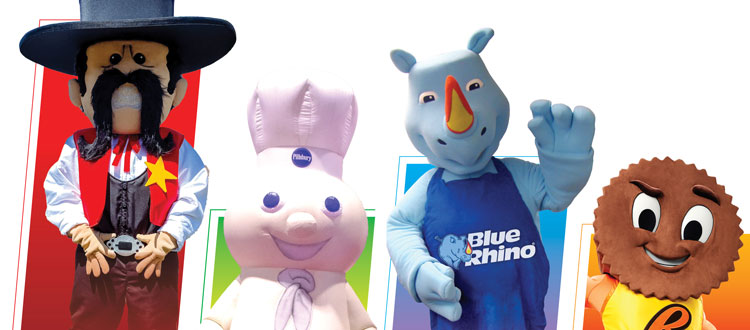
When Weigel’s stores debuted two new mascots in September 2024, Director of Marketing and Merchandising Nick Triantafellou said in a statement that he wanted the characters to “represent more than just a fun face for our customers.” Instead, he viewed the larger-than-life chicken Dippy (at six-foot-three and 250 pounds) and spunky cow Ellie as aiding in the Powell, Tennessee-based retailer’s mission to build community connections and create memorable customer experiences that go beyond the traditional convenience store visit.
Implementing a Mascot StrategyGlenn Street, founder of mascot designer Street Characters in Canada, offered his insights on creating and maintaining a strong corporate mascot.
Make the mascot relevant to your business:
“We find that mammals make a great character. Humanizing them makes them fun and people can relate to them. But we’ve done inanimate objects. ... If you’re a gas station or convenience store, a caricature of your pump is a great way to tie into who you are. You can give them a human component—eyes, a face, a name—so that people get to know
the branding.”
Choose your performer carefully:
“The person who makes the best mascot is an introvert. ... The anonymity of being inside the costume allows the introvert to become that extrovert and do the things that they would never do outside of the costume.” The going rate for a performer is about $30 per hour, and they should have 20 minute breaks scheduled every few hours to get out of the costume for a bit.
Evolve your mascot:
“Update them or change them over time. ... We won’t do a wholesale change all at once. It’ll be a gradual transition” to keep them modern.
Keep it clean:
“Make sure that you clean the costume regularly. ... This is a representation of your brand, so if it starts to look old and tired, I'm not sure that’s the image anybody ever wants to put out.”
Give your mascot a human buddy:
“Have somebody with the character who’s able to tell the character’s story and your organization’s story.” The person can hand out cards or coupons. “Maybe you say, ‘We’re so-and-so car wash. We’re doing a fundraiser for a local school this weekend. Come on down and get your car washed, and we’re going to donate $1 to the school for each car wash we do.’”
Embrace a rivalry:
“People remember Harvey the Hound of the Calgary Flames [NHL team] because the Edmonton coach yanked his tongue out during a Calgary-Edmonton game. It made all the sports reels across North America."
One year later, the characters have appeared in TV commercials, on store signage, and at grand openings and community events, and they’ve interacted with the company’s name, image and likeness (NIL) athlete influencers.
“By integrating them into our social media and advertising, and including our NIL athletes in the fun, they become ambassadors of the Weigel’s experience, reminding people that there’s always something fresh, fun and uniquely local happening at Weigel’s,” Triantafellou said in a press release.
Creating an effective character can result in marketing magic for a retailer that reaches beyond the otherwise dull-sounding “corporate mascot.”
“They are not just fanciful characters but psychological tools that connect with audiences on a deeper level,” described the team at Street Characters, a mascot designer and creator based in Calgary, Alberta, Canada that is responsible for many of the mascots on the sidelines of professional hockey, football and baseball games, as well as mascots for corporations and retailers. “Mascots [act] as memory anchors. They become symbolic of the brand, making it more memorable and recognizable.”
“[Mascots] become a part of your branding ... a walking business card,” said Glenn Street, founder of Street Characters. “They stand out in the crowd, and it’s an opportunity ... to tell your organization’s story.”
That’s one of the goals for Weigel’s, which began as a dairy and still operates one today—thus, Ellie the Cow—and sells a lot of Dippin’ Chicken, which explains Dippy.
Similarly, when candy brand Hi-Chew was creating its Chewbie mascot in 2024, it aligned the character with the brand’s values. “We believe that a mascot like Chewbie helps to personify the Hi-Chew brand, therefore making it more relatable to consumers,” said Teruhiro (Terry) Kawabe, chief representative for the USA and president and CEO of Morinaga America Inc. “Our growing fan base of Gen Z and millennials was a significant driving force behind this decision, as we aim to create unique brand experiences for them both in-person and digitally.”
Ensuring the character “folded seamlessly into Hi-Chew’s existing brand marketing materials, social media strategies and in-person activations” was also important to the process, Kawabe said.
Street is a serious believer in the power of a mascot. He recalled a character he created for a local restaurant years ago: “They told us when they had the character out in front of their restaurant, their sales went up because it just captured people’s attention. Motorists would say, ‘Let’s go in there.’”