There are over 150,000 convenience stores in the United States, generating a collective $837 billion in sales—an amount similar to that of other categories perceived to be significantly larger, such as supermarkets and restaurants, which each generate about $1.1 trillion.
This rapid growth has outpaced the capabilities and infrastructure of many c-store loss prevention teams, which tend to be less robust than their retail counterparts. Even among larger retailers, fragmentation in ownership and inconsistent technology adoption make it hard to scale loss prevention effectively.
“It’s a challenge we’re seeing more and more: stores growing faster than their ability to protect what they’ve built,” said Brian D. Gray, managing director, global head of fuels and convenience retail, at Accenture.
To understand the loss prevention opportunities as c-stores continue to grow, we spoke with a few experts who will participate in a panel at the NACS Loss Prevention and Safety Symposium on Dec. 3 and 4 in Dallas. They shared the trends they are seeing in the space and how operators can prepare to capitalize on them heading into 2026.
Common Causes of Loss—and Crime—in C-Stores
In Gray’s experience, c-store loss prevention is often driven by a mix of internal fraud, operational challenges and external theft—just like it is at all retailers. What’s unique to c-stores is the vulnerability of specific categories.
“Lottery tickets, fuel, tobacco and alcohol are all high-theft items because they’re easy to resell and can be hard to track,” he said. “Pair this with the fact that most convenience stores have limited staff, which makes them more vulnerable.”
Employee theft—especially around the POS and fuel pumps—remains a significant issue. Operational errors, such as pricing mismatches and poor inventory tracking, also play a role. In the realm of external theft, shoplifting and organized retail crime are also on the rise, with smash-and-grabs and coordinated crew thefts that not only impact inventory but also force some c-stores to make tough decisions, similar to those made by their retail counterparts in recent years.
“In high-risk areas, the frequency and severity of these incidents have reached a point where store closures are becoming a potential response,” he said. “C-stores are especially vulnerable,” Gray said, due to their 24/7 operations, smaller team sizes and easy access points.
Often, c-stores face a scenario where it’s more local shoppers who are stealing products like alcohol, energy drinks and cigarettes and selling them in the underground market, said Byron Coleman, managing director at Security Consulting Services and formerly the manager of asset protection and security at Wawa.
“The majority of people are morally good,” he said. “They’re just a small, prolific group of individuals that taint the waters.”
There’s another crime where c-stores play a positive role: human trafficking. Due to their always-open nature and locations in both urban and rural areas, they serve as stops for people on the move—including victims of trafficking and their traffickers, said Cheryl Csiky, executive director of In Our Backyard, an organization dedicated to combating human trafficking that partners with NACS.
“Human trafficking often intersects with other criminal activities such as drug trafficking, weapons offenses and theft,” she said. “Traffickers may coerce their victims into participating in these crimes, creating a cycle of debt, fear and criminalization that makes it even more difficult for victims to seek help or escape. This overlap highlights how trafficking is not only a human rights issue but also a broader public safety concern.”
Unlike many retail environments where purchases are purely transactional, c-store employees frequently engage in conversation at the counter, creating opportunities to spot red flags. C-stores also play a uniquely valuable role due to their accessibility, hours of operation and frequent community presence. That’s why In Our Backyard launched the Convenience Stores Against Trafficking (CSAT) program in 2017. Within about a year, over 5,000 convenience stores had joined the program by posting the Human Trafficking Resource Center hotline in their restrooms. Now, over 50,000 convenience stores have posted Freedom Stickers containing the hotline nationwide.
Convenience stores are ideal places to raise awareness because they serve as standard community hubs where people frequently stop, Csiky said. Additionally, the presence of public restrooms can serve as one of the only private spaces available to a trafficking victim.
“Customers often view stores that participate in this program as committed to community safety, which actually strengthens customer loyalty,” Csiky said. “Victims or those being trafficked often see convenience stores as safe pit stops during their journeys.”
1. Total Loss Framework Is on the Rise
The Total Loss framework, an overarching and fit-for-purpose definition and typology of the full range of losses that retailers experience, has been around for almost 10 years. C-stores have generally been slower to adopt it, said Mark Stinde, vice president, asset protection at Casey’s.
“If you think about convenience store retailers, there has been a more modest investment in the asset protection, loss prevention function as compared to other retail formats,” he said. “With limited resources, you tend to focus on the pressing issues right in front of you.”
However, he has seen more companies interested and engaged in adopting the philosophy.
When he first arrived at Casey’s, “We were really only focused on about 35 or 40% of the total loss in the organization,” he said. Many c-stores and retailers focus intently on malicious loss because it is most apparent.
Casey’s is a food-forward chain known for its pizza and other offerings. Therefore, its total loss must include how it manages perishable items—inventory on hand, product rotation, and code dates, as well as minimizing excessive waste.
“When you’re in a food-forward business, you have to look beyond the traditional pain points or you’re going to be a step behind,” Stinde said. “With excess waste comes excessive cost, which erodes margin, and that, of course, erodes profitability for the organization. So, the importance of looking at areas outside of the traditional loss areas in the business is critical, and that’s why we look at the total loss in the business holistically.”
2. AI Is Everywhere, and Should Be Adopted
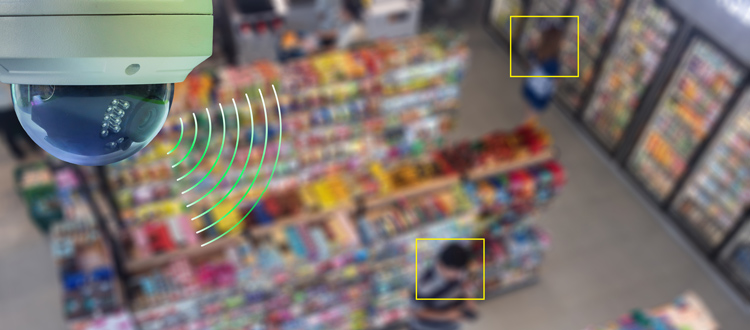
The industry is experiencing a shift towards more intelligent and proactive loss prevention, with AI playing a key role, particularly in video surveillance.
“The tech landscape for LP has changed substantially,” said Gray of Accenture. “We’ve moved from basic CCTV to AI-enhanced video analytics that can detect a wide range of issues across the stores in real-time. Cloud-based platforms now enable centralized monitoring across multiple stores, and mobile dashboards provide managers with real-time visibility into incidents. Fuel pump monitoring has also become more sophisticated, helping prevent drive-offs and fraud. It’s a much more connected and intelligent LP ecosystem than it was even a few years ago.”
AI-powered systems can flag suspicious behavior before it escalates. When paired with integrated platforms that link video, POS and inventory data, they provide LP teams with a much clearer picture of what’s happening in real-time. Gray has also seen significant momentum around proactive inventory management, particularly for high-risk categories such as tobacco and lottery.
“The goal now is to prevent loss before it happens, not just respond after the fact,” he said.
AI has also evolved in the realm of voice-to-text for virtual guarding, according to Coleman of Security Consulting Services. Some solutions can virtually place a guard in a store scenario, and mobile surveillance unit solutions can also trigger based on behavioral patterns generated by AI. Predictive analytics, particularly in the context of exception-based reporting for POS, has also been more heavily adopted by c-stores.
Coleman believes that “any of the technology associated with AI that allows people to focus on those value-driven opportunities, as opposed to all the minutia that sometimes can get in the way,” will be huge. The win is that the proliferation of AI technology is driving the price down for these systems, making them more accessible to smaller or mid-sized c-stores.
“As a c-store LP professional, I spent a lot of hours looking at unproductive video and unproductive leads,” he said. “AI can help speed up that time.”
Stinde points to computer vision tools as an emerging area that c-store LP professionals should consider and test where possible. These solutions can help with malicious loss, safety aspects and operational challenges. AI-backed business intelligence tools are also transforming the c-store LP landscape by enabling more data-driven decision-making.
“We’ve developed some effective business insight and intelligence tools that help us manage total loss in the business,” Stinde said. “We’ve really reduced our use of traditional spreadsheets and other tools to more efficiently manage the business. Our more dynamic business intelligence tools give us insight all the way down to the unit level, and that helps our operators better manage their businesses.”
These systems can also help boost employee productivity by enabling c-stores to tie store-level metrics to employee performance.
“Utilizing tools that are out there, and the advance of technology and AI specifically, I think will be a critical thing that we look at as LP practitioners for the coming years,” Stinde added.
3. The Human Touch Remains Essential
Despite the promise technology holds to enhance the capabilities c-store LP teams have at their disposal, having a human touch is still critical. This means continuing to train employees from both a systems aspect and from a behavioral perspective.
“With so much changing across the markets and with technology, there’s definitely a need to upskill employees,” Gray said. “Ultimately, team members need to know what to look for, how to leverage new LP tools and how to respond to alerts being raised. LP teams are being asked to understand and interpret insights from data analytics, which is a big shift from traditional security roles.”
However, he has also noted an increase in investment in behavioral training.
“Scenario-based learning—like role-playing theft situations—is helping staff build confidence and capability,” he said. “Compliance training is also key, making sure everyone understands the legal boundaries across a variety of scenarios.”
Not unlike the evolution of retail employee training, providing different options for how team members engage with educational material can go a long way towards adoption. At Casey’s, Stinde’s team uses some written materials, but also utilizes animation, video and gamification to help educate team members. Microlearning also seems to be very effective.
“We’re not overloading the content, so the user gets the information they need, but it’s not onerous in terms of the time commitment,” he explained.
Coleman cautions against c-stores heavily relying on technological advancements to the detriment of simple people skills when it comes to what front-end employees should prioritize in their roles. In the name of increased consumer demand for speed and convenience, the POS experience has become more transactional. Consequently, some of the human touch associated with traditional customer service has been set aside.
“Most people know what they want when they come in, because they’ve done Google searches and informational searches,” he said. “So you end up with a much more transactional, impersonal sales process, and to overcome that, you have to train how to interact with customers positively. Being able to teach people how to interact and de-escalate is a key factor, but positively impacting a customer can prevent theft in the first place,” he said.
Other types of c-store crime require a slightly different approach.
In partnership with the c-store industry, In Our Backyard has developed easy-to-implement training for store staff on how to recognize and report suspected trafficking. The presence of the hotline sticker inside restrooms provides a private and safe way for anyone—whether a child or an adult—to reach out for support in a public setting.
“We focus on safety—no one should intervene,” Csiky said. “It can increase harm to the victim and those intervening. It’s best to wait until the situation is clear and make the call. It could be a tip that saves lives.”
Csiky shared that a short video training is available if you reach out to www.InOurBackyard.org or [email protected]. The organization can also coordinate a recorded Zoom meeting or webinar with management, if preferred, as an update for employees. It also offers an HT101 Training Series, a three-part program designed explicitly for frontline employees, providing practical tools and knowledge on identifying trafficking, responding appropriately and connecting victims to support. Posting Freedom Stickers in public restrooms, displaying awareness signage and keeping this issue visible in stores are small actions that can lead to life-saving outcomes, she said.
The compassionate, cooperative spirit of In Our Backyard is something all c-stores can keep in mind as they look to enhance their strategies for addressing a range of LP and safety issues in 2026 and beyond.
“We got into the business because we’re human behaviorists, but now you must have a data analysis mindset, and then you have to have collaborative problem-solving,” Coleman said. “The bottom line is that it’s taking everybody to help try to solve this problem.”
Register to attend the NACS Loss Prevention and Safety Symposium, Dec. 3 and 4 in Dallas, at convenience.org/lossprevention.