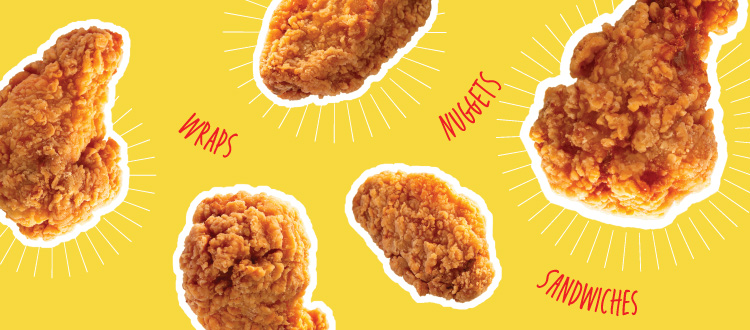
Chicken of all configurations—tenders, wraps, wings, sandwiches, nuggets—is an increasingly hot category. According to Datassential, the number of limited-service chicken restaurants expanded by nearly 5% in 2024, and sales jumped almost 10%. A 2025 Technomic chain report found that chicken is the second-fastest-growing restaurant category behind beverage/snack chains.
Among QSRs, McDonald’s recently introduced McCrispy Chicken, its first permanent new menu item in four years, and brought back its crispy chicken Snack Wrap; Taco Bell revived Crispy Chicken Nuggets for a limited time and expanded its chicken offerings overall; and Culver’s said it improved the fillet on its chicken sandwich, which comes crispy, spicy or grilled.
Proving that people love chicken on their table and also in their portfolio, the 300-unit Dave’s Hot Chicken—Nashville-style chicken that popped up in a Los Angeles parking lot eight years ago—recently sold to private equity firm Roark Capital in a deal valued at $1 billion.
Accidental Chicken
The Market stores, owned by Charlottesville, Virginia-based Tiger Fuel, have developed a successful foodservice program, but the retailer didn’t put chicken on the menu until it acquired a location that already offered it.
After tweaking the original program, The Market now sells bone-in chicken and tenders, along with potato wedges, mac and cheese, green beans, mashed potatoes with gravy and occasional specials. “The big thing is our Tiger Sauce,” said Nico Robinson, culinary program manager at The Market. “Tiger Sauce has a good amount of tang, but it’s not spicy. People tell us it’s better than [Raising] Cane’s sauce.”
To produce a Southern fried chicken like The Market’s, “you have to have the crispy, you need the flake, and it’s got to have the snap when you break into that skin,” said Robinson. “If everyone follows the system and doesn’t take shortcuts, it comes out amazing. We’re fortunate to have great people who do that every day.”
The Market manages a tremendous catering business. Although most catering orders are for box lunches with sandwiches, the stores also fulfill large orders of chicken. “We package the chicken in foil that has holes to vent the steam so we don’t lose our breading, and we transport the order in our Market-branded carrying cases, which look a little like a pizza bag,” Robinson said. “We deliver it to the customer and set it up for them, making sure they are stocked with utensils and everything they need.”
Make It Your Own
In 2020, 7-Eleven rolled out its Raise the Roost Chicken & Biscuits concept, which features made-from-scratch, hand-breaded, fried chicken tenders; bone-in and boneless wings; and chicken sandwiches, including chicken breakfast sandwiches and burritos, that are made to order or available as grab-and-go options.
“We developed Raise the Roost to meet the growing demand for high-quality, restaurant-style food in a convenient setting,” said William Armstrong, senior vice president of restaurant operations and innovation at 7-Eleven. “Chicken is one of the fastest-growing menu categories in the U.S. restaurant sector, and customers increasingly expect quick-service options that don’t sacrifice flavor, freshness or quality.”
Currently available in 116 7-Eleven stores across 18 states, the program aims to deliver chicken favorites with a focus on freshness, flavor and speed. “What makes the program work long term is our commitment to continually evolving the menu and introducing craveable, on-trend products and LTOs to surprise and delight our guests,” Armstrong said.
Winning LTOs for Raise the Roost have included a hot honey chicken biscuit and chicken sandwich, cobranded in October 2024 with Mike’s Hot Honey, and spicy versions of the chicken biscuit and chicken sandwichduring the summer.
“Launching a successful chicken program requires more than great food—it takes consistency, speed and a standout guest experience that captures attention and turns first-time trial into long-term loyalty in an already crowded category,” Armstrong said. “We continue to evaluate new formats and flavors as part of our broader food innovation strategy.”
Turnkey Assistance
Turnkey programs are solutions for c-store retailers who want to offer hot, ready-to-eat chicken meals without starting a proprietary program from scratch. The programs typically provide chicken, sides, equipment, marketing, training, supply chain support and menu development.
Chester’s Chicken began serving c-stores in the late ’80s and is now available in 1,100 locations. The operation was created with limited space in mind.
“Retailers need a merchandiser to hold chicken, the fryer, a prep table, the proper amount of refrigeration, storage, freezer space, a small Cadco oven, about 400 square feet of kitchen space and 60 square feet of counter space,” said William Culpepper, vice president of marketing for Chester’s International. “Some operators put the fryer in the back of the house and bring the fried chicken out to the merchandiser. Some put it behind the merchandiser, which lets customers see the process. It does require some dedicated staffing, especially during busy times and preparing for the lunch rush.”
The program is especially attractive to small and midsize operators. “They understand that foodservice will drive their business,” said Culpepper. “We come in and become an extension of their team.”
At the NACS Show in October, Chester’s unveiled a new merchandiser dubbed the Krispy Station, which can hold hot chicken and prepackaged sides for up to three hours—two hours longer than the hold of the company’s previous hot box.
“Take a tender out of there after three hours, and it tastes just as fresh as if it just came out of the fryer,” Culpepper said. “It improves product quality, provides a better experience for the customer and is less expensive than the unit we sold previously. We’re also excited about our new fryer, which has two baskets. It lets stores fry two items at one time and cook in small batches.”
The new technology was tested in two Break Time stores, the convenience brand owned by Columbia, Missouri-based MFA Oil, and received two thumbs-up from store management. “When a customer ordered a meal in the past, you had to stop the process and cup up small side items, lid them and box it,” said Roger Hudson, senior foodservice manager at Break Time. “With the new equipment, the sides are already in the case, and it takes about half the time to pack the customer’s meal than it did before. We hope to roll this out to our other stores soon.”
The Krispy Krunchy Chicken program features hand-breaded, Cajun-spiced fried chicken; all-white-meat tenders and nuggets; and honey-butter shrimp and biscuits, plus sides. No specific store footprint is required, but each store needs room for a hood, an 85-pound fryer and a hot food case. Krispy Krunchy provides comprehensive training for store staffers and marketing and point-of-sale materials. “It’s the easy button for operators,” said Joe Gordon, chief supply chain and technology officer at Krispy Krunchy. “It’s a turnkey program and we come in with everything from equipment to product to merchandising support so there isn’t that lift from retailers [to start their own foodservice program]. We design our products to be simple to execute in a c-store, while also being top of the line, gold-standard products that can compete with any restaurant out there.”
Krispy Krunchy Chicken introduced chicken nuggets earlier this year after determining they were a high-demand item. Locations that have added nuggets are selling an average of 7.8% more poultry than stores without nuggets, according to Krispy Krunchy’s data. The company said it has done extensive research and user testing to develop its menu and focuses on designing a program that’s specific to c-stores. According to company data, operators that add Krispy Krunchy Chicken see foot traffic increase 10-12% and merchandise sales increase 15-20%.
Broaster Co. offers two branded, trademarked programs, Genuine Broaster Chicken and Broaster Express. Like most turnkey programs, Genuine Broaster Chicken uses fresh chicken, but Broaster Express relies on frozen products, which are simple and more convenient for c-stores, said Katie Klaus, senior marketing manager at Broaster. The programs are in 5,000 locations today, with about 20% being Broaster Express and 80% Genuine Broaster Chicken.
“With a fresh chicken program, operators run the risk of ordering too much chicken that expires before it’s used,” said Klaus. “Plus, fresh chicken requires stringent food safety practices due to the increased risks of foodborne illness, which some smaller stores may not be prepared to execute.”
Broaster Express requires four square feet on a back counter for the program’s ventless fryer. No hood is necessary in most municipalities, a key benefit of the program. C-stores can operate the program as a made-to-order concept or put a merchandising case on a front counter, allowing customers to grab precooked products.
“C-store operators can add Broaster Express for as little as $14 per day, with as few as four menu items,” Klaus said. “With Broaster Express, the operator chooses which items to offer, ensuring the flavors and product mix are what their customers crave.”
The McLane Company recently launched its first branded chicken offer, HiBird. The program is designed for grab-and-go offerings and includes fully cooked chicken filets and strips, as well as sides of white cheddar mac and cheese and potato wedges. The chicken can be cooked either in an oven or fried, said Farley Kaiser, senior director, culinary and innovation, The McLane Company.
A Combined Approach
Each day, Love’s Travel Stops feeds thousands of road warriors with a combination of proprietary foodservice offerings, turnkey programs and a range of QSRs.
“Customers want fast, fresh food offerings on the road that are also affordable,” said Wade Arthur, senior manager of food operations at Oklahoma City-based Love’s. “It’s important for those items to be portable and easy to eat on the go. Love’s offers Chester’s, Bojangles, Hardee’s and Carl’s Jr., depending on the location. Love’s Fresh Kitchen offerings include chicken tacos, chicken salad wraps and spicy chicken drumsticks.”
For a retailer that wants to add chicken items to its menu board, Arthur stressed the importance of food safety and training team members to follow proper procedures, especially when working with hot oil and fryers.
“We also understand the importance of prep work,” he said. “Breading, seasoning and frying food, frequent restocking and cross-training team members to handle both prep and service is essential for standardizing processes that reduce points of friction and improve consistency for customers.”
No matter which program a retailer chooses, it’s important not to cut corners, Robinson said. “Be sure to get the right equipment,” he said. “Not investing in the right equipment will cost you down the road. Make your process as simple as it can be. The [finished product] may not be right the first time, but continue to try it. As successful as our chicken program is, we still go back frequently to review it. Chicken is amazing.”