What trends are you seeing in proteins right now?

SVP of operations and supply chain, Lower Family Foods
Michael Mortensen: We have seen a very, very large increase in orders for our presliced deli meats, which we see are used in traditional sandwiches as well as wraps or in breakfast options. We’ve also experienced huge growth within the barbecued smoked meat category.
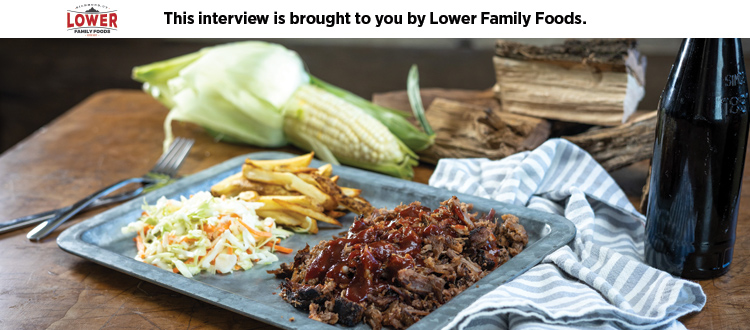
Customers are looking for a premium product that doesn’t have many ingredients, which is exactly what Lower Foods offers. And it’s flexible—you could make a brisket sandwich or offer mac and cheese topped with smoked brisket, or even switch dayparts and include barbecue in a breakfast burrito or sandwich.
Casey Boren: Birria is a huge trend. A lot of c-store trends follow what QSR is doing, and there are a lot of menus out there that have birria on them. You see different varieties, from birria tacos to birria ramen. Al pastor is on a lot of menus too, and we offer both products to retailers.

SVP of sales and multi-unit accounts, Lower Family Foods
Can you tell us a bit
about Lower Foods?
Mortensen: Lower Foods is a fourth-generation family-owned company based in northern Utah. When it was founded, Lower Foods began by doing slaughter for the sausage industry. Over the years the company has evolved more as it shifted into the cooked product business.
In the ’80s, Lower Foods started out with just deli meats—offering roast beef, corned beef and pastrami. Now, we have a full selection of deli meats, a full selection of barbecue items, and a full selection of items inspired by Hispanic cuisine.
Is there a product in your portfolio that you’re most proud of, or that most exemplifies what Lower Foods is all about?
Mortensen: On the deli side, one of our favorites right now that we’re very proud of is smoked pit beef, which is smoked roast beef. On the barbecue side of things, it has to be our smoked brisket. We’ve gone from being just a deli company to shipping smoked briskets from Utah into Texas and into all of the other traditional barbecue states.
Boren: As Michael mentioned before, a strength of our products is the various applications each product has. Space is a huge issue, so if you have one protein, how do you make multiple things, whether that’s an LTO or a regular menu item. Our chopped brisket, to me, fits that bill the best.
How do your products address the labor and operational challenges around foodservice?
Boren: Around 95% of everything that we make is fully cooked ready to eat, which is a huge labor savings for a retailer. For some products, like our deli meats, we offer them presliced, which also reduces labor.
We also offer what we call dual purpose packaging, where an item can be reheated in the package in a steamer or in a hot water bath. Or, if the end user wants to actually just take it from a thawed state, put it in the oven and reheat it in that package, they can do that as well, and that heating method enhances the product quality in addition to the convenience.
Mortensen: In a lot of cases, like our chopped or sliced smoked briskets, we’re providing items that can be heated in 30 to 45 minutes that would normally take anywhere from eight to 16 hours to cook if retailers were trying to cook it themselves, saving time.
Boren: Additionally, our products help with food safety. It helps eliminate any cross contamination with any raw products to not have raw chicken or raw beef in the back of the house.
Your facility is allergen-free. How does that help your retailer partners?
Mortensen: It eliminates liability through the entire supply chain. It takes away the worry of “Do I need to post something up here saying there might be allergens included in this?” You don’t have to inform your consumers of one more allergen.
Boren: When you go through the nine common allergens and rule them out, when you talk to people about it they almost immediately understand that if you’re an allergen-free facility, you have a cleaner ingredient label than they might be used to.