What makes a great site? It starts by asking what makes a great site for your specific brand.
You should know exactly what kind of retailer you are, what your identity is and who your customer is, said Elizabeth Kershaw, vice president, fuel location intelligence, Kalibrate, a location intelligence and retail analytics company in Irving, Texas. “Think about what is your brand; what are your services,” she said.
Once you know that, you can look at areas that work for you. Which areas are growing the fastest? Where are the people you want to reach?
Fresh Stop is a Charlotte, North Carolina-based operator that currently has 37 stores. It’s looking to rebrand them as Fresh Stop Express with a premium offering, and expects to open 15 to 20 a year by 2028.
Madison Capital Group owns Fresh Stop. Its executive managing director, Josh Hamby, relies on a mixture of technology and old-school methods to find and assess new sites.
A lot of the site selection process is finding your customers and putting your business in a convenient place for them, said Hamby. “It’s not simply about the number of cars that go past the site; it’s who’s in the car,” he said.
Knowing who your customers are will tell you what they like to buy, when they buy it and how often. In addition, knowing your customers means knowing their interests, their jobs and how they like to be marketed to, he said. Zooming out even further: How do they view the world?
That customer profile, said Bill Stinneford, executive vice president of Buxton, a customer and predictive analytics firm in Fort Worth, Texas, “needs to be the north star.” “If you are looking at surrounding areas to expand into, you can start to see where there are high concentrations of your lookalike customer. Then you marry that with the traffic data to zone in on that.”
Looking at other retail in the area can also tell you a lot about who’s shopping in that neighborhood. If there’s an Aldi, does that attract the same type of customers as you do, for example?
Listening to the Data
To find a site, the next thing c-store developers should do is let analytics drive where there are opportunities or where there will be opportunities based on projected growth.
The easiest way to get a good read on sites suitable for your concept is to get data on them. This includes traffic numbers, nearby competition, demographics (who lives and works nearby, their age, their income, what they buy), and which local community centers are close.
It’s important to understand everything about a location, especially traffic and how people are moving within that area. If people are commuting out of the area, how are they getting there? Are they traveling past your store, or are most people staying nearby most days? If so, how are they likely to use your store and when?
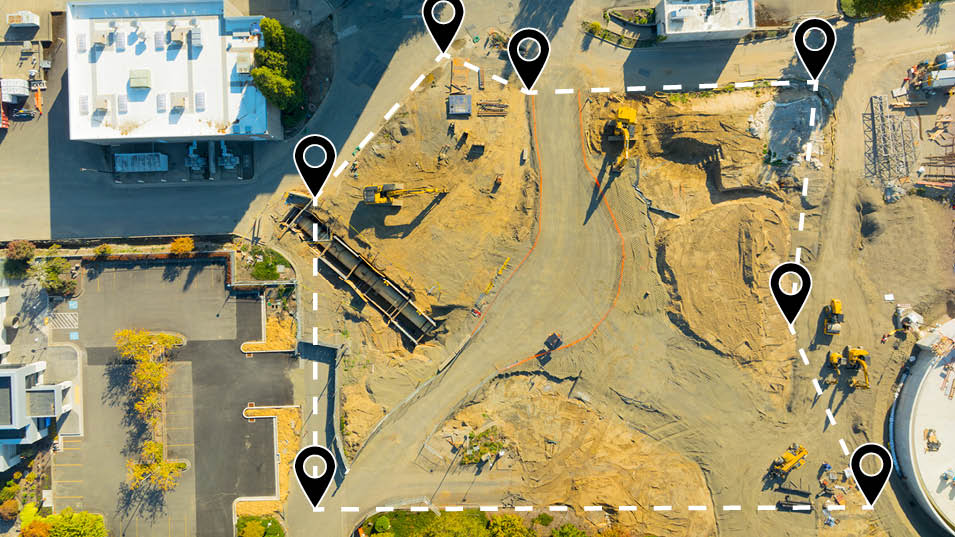
To find this out, Kalibrate deploys mobility data and geofences a location, or several locations, to compare them. From this it can estimate the demographic data for a site including population, ethnicity and age, and income level. The data also looks at electric vehicle usage in the area.
You need to know what’s important to you within the analytics, said Stinneford.
Madison Capital, the operator of Fresh Stop, collates a wealth of data for every site, then uses tools such as Kalibrate and feasibility analyses, and makes sure everything matches up with the company’s internal analytics. Forecasting data can be helpful because all convenience stores want to be around, doing strong sales, for at least 10 to 15 years, Hamby pointed out.
Rutter’s, based in York, Pennsylvania, uses a mix of in-house and publicly available data to evaluate sites. And “while there is some feel to finding good sites, data can help validate or invalidate personal opinions,” said Chris Hartman, vice president of fuels, advertising and development. “Matching inherent knowledge with the data is a great way to confirm your plan or force more research.”
It’s also important to know what’s around the location in terms of competition. That could be other convenience stores, QSRs or even grocery stores. Have any competitors put in for a permit? Are there any rezoning projects?
Don’t ignore competition from your own stores. If you have an existing network, understand the white space so you’re not cannibalizing your own c-stores, explained Kershaw.
Also: Be aware of issues that will make the site a no-go. This can include sewer capacity or unsuitable soil.
Doing It In-House
Rutter’s typically finds sites for new stores through its in-house real estate team, but also keeps in touch with brokers outside the business. “You need a lot of avenues for finding locations. We research any opportunity,” said Hartman.
“We consider a variety of factors, including traffic counts, access, demographics, competition, environment, topography and site size,” he explained. But, he added, data can’t factor in things like development that’s underway, so you need to have a feel for it too. And Rutter’s understanding of its customers, driven through its loyalty program, “is key to selecting great sites,” said Hartman.
Rutter’s also wants to know what’s nearby like churches and schools. Is the area going to be developing more? If so, what kind of development, and what sort of person will it attract?
Collecting disparate pieces of information is important, he said. “You could have access and the right demographics and the right everything else but you find out there’s a mine underneath the site. You have to have all those high-level boxes checked so you’re not looking at a site that’s unbuildable.”
You also need to know what’s planned for near a site, said Hartman. Is the town going to build a bypass, houses or a big retail development? Rutter’s discovers this through state websites and chatting to locals and businesses. “You want to know what’s planned 15 to 20 years out, if not longer,” he said. “If you’re building a store you’re not building it for five years but for a period of time to get a return on your investment.”
Boots on the Ground
Visiting a potential site is just as important as looking at the data, said Kershaw, and ideally developers should visit a site at least twice.
“When science and art work in concert you can do things quicker, easier and with more confidence,” said Stinneford. It’s the mixture of this and the analytics “that allows you to measure twice, cut once.”
Topography is really important to every site, says Hartman. “Walking a site is important,” he said. Are there wetlands or endangered species of animals or plants that don’t get picked up by Google Maps? And visit a site at different times, ideally in different seasons and weathers. “A map is a snapshot in time so conditions can change,” he said.
It’s important to use your judgement, says Hamby. “Drive the market, see the site in person, walk around, talk to local businesses, understand what challenges they face. Maybe the access looks great on a screen but when you go to it you can’t use the access points.”
Hamby likes to talk with the owners of nearby businesses. Nothing can beat going in and chatting to employees or the manager, he said. He also uses Placer.ai to get traffic information on nearby restaurants.
Hamby’s boots-on-the-ground approach continues after the site is selected. “I’m very big on community development, so I want to be in city hall or the mayor’s office, interacting with the local community, because they should have a say and know we’re listening.”